
Reviewed · COSTA ADEJE EXCURSIONS
South of Tenerife : DSD Scuba Diving for beginners, Adeje
First-time scuba training can feel at sea. What makes this course interesting is the clear, step-by-step structure: beach theory first, then hands-on practice, and finally an underwater look at marine life to 12 meters. I also love that the session builds confidence in stages, so you are not thrown straight into the deep end. The main consideration is simple, you stay within a beginner depth range, so if you are chasing big-depth thrills, this is not that kind of experience.
You get a small-group setup, up to 6 travelers, and English-speaking guidance. Pickup is offered from nearby hotels in Costa Adeje area, and the whole flow takes about 3 hours starting at 8:45am, which is a comfortable length for first-timers.
In This Review
- Key highlights you will care about
- DSD beginner scuba in Adeje, what you learn and why it matters
- Getting there from Costa Adeje, timing and what pickup really means
- Beach theory first, how the class sets you up for calm skills
- Shallow-water practice, regulator breathing and buoyancy control
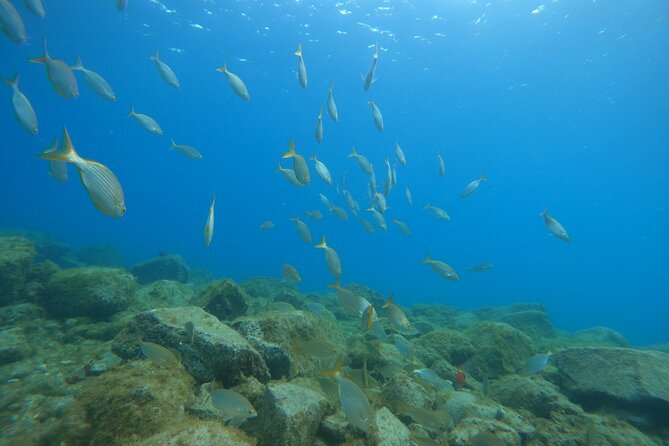
- Underwater exploration to 12 meters, what you might spot
- Equipment, insurance, and what is included in the $102.13 price
- Who this is best for, and when to think twice
- Should you book this beginner scuba course in Adeje?
- FAQ
- Where do we meet for the session?
- What time does the course start and how long is it?
- Is pickup available from my hotel?
- Does the price include equipment?
- What depth do beginners go to?
- Is weather a factor?
Key highlights you will care about
- Beach-first lesson that explains equipment parts, safety steps, and the exact exercises you will do underwater
- Shallow-water practice to learn breathing through the regulator and get comfortable with buoyancy control
- Max 12 m for beginners, enough for real underwater wildlife without overreaching
- Patient instruction with specific coaching names like Juan, Ellina, Zoey, Kris, Mitch, Aleks, and Muslim showing up in real experiences
- Small group of up to 6 which helps you get more attention when you need it
- Includes gear and diving insurance, so you can focus on learning rather than logistics
DSD beginner scuba in Adeje, what you learn and why it matters
This is a first-course style program, built for people who have never used scuba gear before. The key value is the pacing. You start with a theory session on land, so you understand what each piece of equipment does, what to expect in the water, and how to handle the basics calmly. Then you move into shallow-water skill work, which is the part that helps most newcomers avoid the panic spiral of trying to figure everything out at once.
After you practice the fundamentals, you do a final underwater portion where you can turn those skills into actual exploring. In practical terms, you learn how to stay in control of your body position, so you do not fight the water and you can actually look around. This is where beginner courses can either feel stressful or feel fun. This one is designed to tilt toward fun by keeping the plan structured and the coaching steady.
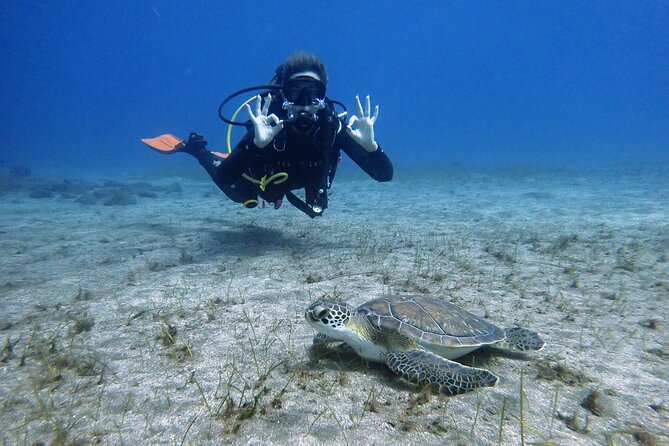
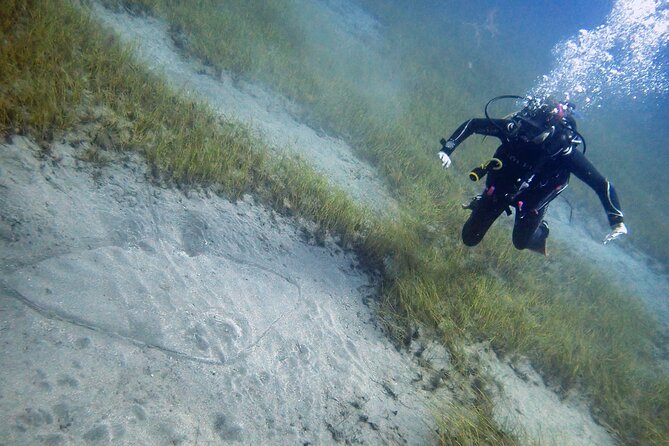
You also get a real sense of the marine life right away. People mention colorful fish, sting rays tucked into the sand, and even sea turtles. You cannot count on any specific animal, but the fact that these sightings show up for first-timers is a good sign that the program is set up for enjoyable, accessible underwater conditions.
The resort coast, without the resort crowds
- Costa Adeje: Whale & Dolphin Eco-Cruise with Snacks & Drinks
★ 4.6 · 5,096 reviews - Costa Adeje: Whale Watching Catamaran Tour with Drinks
★ 4.7 · 3,653 reviews - Whale Watching Eco-Adventure from Costa Adeje
★ 5.0 · 2,066 reviews - Costa Adeje: Whale & Dolphin Submarine Vision Mini Cruise
★ 4.5 · 2,043 reviews - Costa Adeje: Whale and Dolphin Cruise with Food and Pickup
★ 4.3 · 1,604 reviews
Getting there from Costa Adeje, timing and what pickup really means
The day starts at 8:45am, with the meeting point inside Hotel GF Isabel on Avenida de Moscú 2, in Costa Adeje (38660). The activity ends back at the meeting point, so you are not dealing with a complicated return plan.
Pickup is offered, but the pickup time depends on your hotel location and the day’s schedule. After booking, you are expected to contact the operator to arrange the time. That detail matters because it affects what time you need to be ready. If you are staying outside the closest zone, you might need to plan for an earlier pickup and an extra buffer before the start.
Transport is included via an air-conditioned vehicle, which is a nice quality-of-life touch in Tenerife mornings when the sun can ramp up fast. The total duration is about 3 hours, so you are back on land without losing half your day.
One more practical note: this runs in English, and it is limited to a maximum of 6 travelers. That small group number is not just a comfort factor, it also reduces waiting time when you have questions about gear setup or breathing technique.
Beach theory first, how the class sets you up for calm skills
Part one happens at the beach with a theoretical session. This is where the course earns its money. You get a careful walkthrough of the steps you will follow, plus an explanation of the equipment and its parts. For a beginner, this is huge. When you understand the gear, the underwater portion stops feeling like a mystery.
In the theory you also learn the exercises you will do underwater later. That means when instructors cue the next skill in the water, you are not translating instructions on the fly while also managing breathing and body position.
What I like about this approach is that it respects your brain. New scuba students do not fail because they are clumsy. They struggle because everything hits at once: new gear, new breathing rhythm, new pressure sensations, and new hand signals. A land lesson gives you a script to follow, even if you feel nervous.
You can also tell from the feedback that patience is part of the teaching style. Names that come up include Kris, Mitch, and Gabrielle. People describe drills and calm coaching, which is exactly what a first course should look like. If you tend to overthink in unfamiliar situations, this theory-first structure will make the next steps feel far more manageable.
Shallow-water practice, regulator breathing and buoyancy control
Part two is your shallow-water training. This is where you get your first real experience breathing through the regulator. You also practice handling the buoyancy compensator, which helps you manage how you float.
For most beginners, the two biggest hurdles are:
- getting comfortable with the breathing rhythm
- not letting your buoyancy turn into a constant struggle
That shallow setting matters. It gives you room to make mistakes without the consequence of being too far from the surface. You rehearse the exercises that were explained earlier, so skills move from theory to muscle memory.
What you will likely notice during this phase is that instructors focus on staying relaxed. Several experiences highlight that students felt supported and guided through drills, including people who were learning alongside family members. When an instructor keeps things calm, your body cooperates more quickly and you spend less time fighting your gear.
Also, buoyancy training is the difference between looking around and spending the whole time trying not to sink or float up. Good buoyancy control helps you feel steady, and that steady feeling is what leads to better wildlife spotting later.
If you are worried about balance, you should know that one of the most detailed feedback stories mentions how a first-timer found it challenging at first to find balance, while their companion had an easier time. That is normal. The upside here is that the instruction is aimed at helping you work through it rather than rushing you past it.
Other things to do around Tenerife
Underwater exploration to 12 meters, what you might spot
Once the shallow-water skills click, the course moves into the open-water portion, to a maximum depth of 12 meters. For beginners, this depth is a sweet spot. It is deep enough to feel like real underwater exploration, but not so deep that the day becomes overly technical.
This is the portion where you get to look for marine fauna. Experiences mention:
- colorful fish
- sting rays buried in sand
- and sea turtles seen at the same time
Again, no one can promise exact wildlife, but these are credible signs that the local underwater environment can be full of interesting sightings even for first-timers.
Your best strategy at this stage is to focus on your breathing and buoyancy first, then let your eyes do the exploring. If you chase animals while you are fighting your body position, you can miss the moment. But if you are stable, you get to enjoy what is around you.
Instructors named in feedback for this kind of calm, guided exploring include Juan and Ellina, and also Aleks for a related family snorkeling experience. The common theme across these experiences is that guidance helps you feel relaxed enough to actually take in the scenery.
Equipment, insurance, and what is included in the $102.13 price
The price is $102.13 per person, and the value is in what comes with it. You get:
- Use of scuba equipment
- an air-conditioned vehicle
- diving insurance
For a beginner, the equipment inclusion is the big one. You avoid the headache of renting the right gear pieces on your own, and you also benefit from instructors fitting and checking the setup as part of the learning process. That reduces friction.
The session length, about 3 hours, also helps with value. You are not buying a half-day of theory with no water time, and you are not paying for a long multi-site itinerary. This is a contained learning experience with a clear progression.
What is not included is pictures. If you want photos, you should plan to take your own with a phone or camera suited for water. If you are the type who likes underwater shots, bring a plan before you arrive, since you cannot count on the package to cover it.
Bookings are often made about 12 days in advance on average. That is a useful signal for you. If you are traveling in peak season or on a tight schedule, you should not wait until the last minute.
Who this is best for, and when to think twice
This course is aimed at beginners. If you are looking for your first real scuba experience with structure, coaching, and step-by-step progression, you are in the right place.
It also sounds like it works well in family scenarios. Feedback includes parents doing practical scuba coaching for children, with instructors described as reassuring when someone felt less comfortable. Names that show up in that context include Muslim and also Mouslim in another write-up, which suggests consistent staffing and a calm teaching approach.
It is a good choice if you:
- want a gentle on-ramp to scuba skills
- appreciate instruction in English
- like small groups, up to 6 travelers
- want a realistic chance of wildlife sightings at beginner depth limits
The one time to think twice is if you are an experienced underwater enthusiast. Because the program is built for first-timers and capped at 12 meters, it is unlikely to satisfy someone hunting deeper or longer technical profiles.
Also, this activity requires good weather. If weather is poor, your schedule can shift. That is not unusual for the island, but it is something to factor into your overall trip timing.
Should you book this beginner scuba course in Adeje?
If your goal is to learn scuba basics without chaos, I think this is a smart book. The strongest reasons are the staged teaching (theory first, shallow skills next, then controlled exploration) and the instructor style reflected in feedback, with names like Kris, Mitch, Zoey, Juan, Ellina, Aleks, and Muslim coming up repeatedly as supportive and patient.
Book it especially if you want your first underwater experience to feel guided and doable. Bring your nerves with you, but also bring your willingness to practice drills. That is how the whole day turns from scary to exciting.
If you want deep-water action, longer multi-site routes, or professionally handled photo packages, you may feel better choosing something else. Otherwise, for a beginner course in Costa Adeje, this one is priced in a way that makes sense for what you get, with equipment and insurance handled for you.
FAQ
Where do we meet for the session?
The meeting point is inside Hotel GF Isabel on Av. de Moscú, 2, 38660 Costa Adeje, Santa Cruz de Tenerife, Spain.
What time does the course start and how long is it?
It starts at 8:45am and lasts about 3 hours.
Is pickup available from my hotel?
Yes, pickup is offered. The exact pickup time depends on your hotel location and the operator schedule. After booking, you need to contact them to arrange the pickup time.
Does the price include equipment?
Yes. Use of scuba equipment is included.
What depth do beginners go to?
The underwater portion goes to a maximum depth of 12 meters.
Is weather a factor?
Yes. The experience requires good weather, and if it is canceled due to poor weather, you will be offered a different date or a full refund.
If you want, tell me your hotel area in Costa Adeje and your diving experience level (zero, snorkeling-only, or past courses). I can help you map what to prioritize for a smooth morning.
Just Added to the Tenerife Lineup
Costa Adeje Excursions, compared.
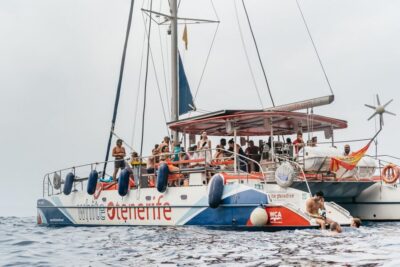
Whale & Dolphin Eco-Cruise with Snacks & Drinks
Read our review →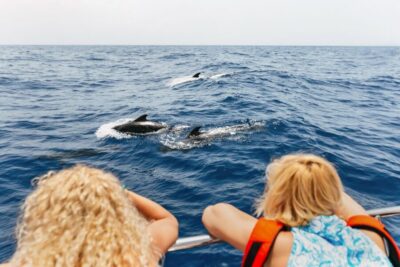
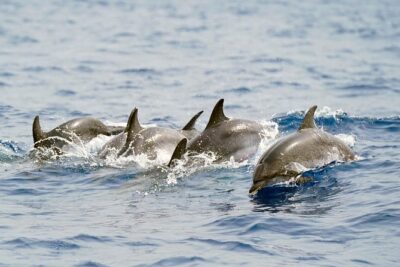
Whale Watching Eco-Adventure from Costa Adeje
Read our review →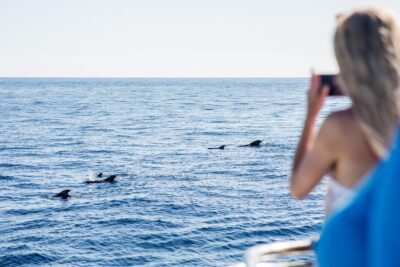

Whale and Dolphin Cruise with Food and Pickup
Read our review →
Whale and Dolphin Watching Cruise with Lunch and Swim
Read our review →
Browse the lists this tour appears in