
Reviewed · PLAYA DE LAS AMERICAS TOURS
Playa Las Américas: Saturday Surf Camp for kids aged 5 to 13
Three hours of surf time for kids sounds fun. This Saturday Surf Camp in Playa Las Américas is a simple, focused way to give beginners real ocean practice, plus beach games, with all the right gear handled by Kontraola Surf School.
I love that the instruction starts on the sandy beach at Playa de Troya, so kids are not wrestling with rocky conditions or complicated setups. I also love the small group format, limited to 6 participants, which means less waiting and more hands-on coaching.
One important drawback: kids must know how to swim, and you also need a reachable adult. If your child is still shaky in the water, this camp may feel like too big a jump.
In This Review
- Key things to know before you go
- A simple way to plan Saturday surf lessons in Playa Las Américas
- Meeting point at Calle Caracas, then straight to Playa de Troya
- What the beginner surf lesson actually covers
- Beach games that keep motivation high when waves pause
- Gear that’s included, plus what you still need to bring
- Parents, swim comfort, and the rules that keep kids safe
- Price and value: what you’re really paying for
- Best fit for families with kids who want action, not lectures
- Packing checklist for a smooth morning at Playa de Troya
- The booking decision: should you book this Saturday surf camp?
Key things to know before you go
- Saturdays only, 9:00 to 12:00: a clean half-morning slot that fits holiday schedules.
- Beginners on Playa de Troya: sandy beach sessions that help first-timers get confident fast.
- Small groups (up to 6): more instructor attention during wave time and quick fixes when things go wrong.
- Wetsuit and surfboard included: you avoid last-minute gear shopping.
- No phones or electronic games: your kids stay in the moment, even if you bring distractions.
- Swim skills required: you’ll want your child comfortable in open water.
A simple way to plan Saturday surf lessons in Playa Las Américas
If you’re in Playa Las Américas for the holiday stretch, you want activities that are easy to understand and quick to run. This camp is built exactly for that. It runs Saturdays for kids ages 5 to 13, with a 3-hour format from 9:00 a.m. to 12:00 p.m. That kind of timing matters. It avoids the all-day squeeze that can turn beach plans into a logistics headache.
What makes this work well is the mix of real surf practice and on-beach fun. Kids are not only waiting around for their turn. They get structured coaching, then they get to burn energy with beach games alongside other kids. That social part is underrated. For a beginner surfer, confidence grows faster when they see peers trying the same thing.
And because it’s a small group, your child is more likely to get feedback right when it matters. Surfing is all micro-moments, like paddle timing, standing timing, and staying balanced once a wave lifts them. In a group of 6, that’s easier.
Resort strip, nightlife, and a long beach
- Group Surfing Lesson at Playa de las Américas, Tenerife
★ 5.0 · 1,072 reviews - From Playa de las Américas: Full-Day Teide Jeep Safari
★ 4.7 · 1,056 reviews - Playa de las Américas: Private or Small-Group Surf Lesson
★ 4.8 · 980 reviews - Private Surfing Lesson at Playa de las Américas
★ 5.0 · 167 reviews - Group Surf Lesson at Playa de las Américas
★ 5.0 · 110 reviews
Meeting point at Calle Caracas, then straight to Playa de Troya
The camp starts at a specific, easy-to-find place: Calle Caracas nº 23, which is the Kontraola Campus. Drop-off is at 9:00 a.m., and pick-up is at the same meeting point around 12:00 (they mention children will be picked up between 11:45 and 12:00, so it helps to be there at 11:45).
Be punctual. That’s not just a polite request. With only a 3-hour session, a late start steals learning time. Also, kids need to get into wetsuits and get oriented before they hit the water. When families are on time, the whole morning runs smoother.
A key detail for parents: the camp is organized so the beginner surfing course happens on the sandy beach at Playa de Troya. That helps first-timers. Sandy setups are usually more forgiving underfoot than uneven rock or complicated shore breaks. Your child can focus on learning, instead of negotiating the ground.
For first-time surfers, this kind of flow matters. You drop them at the campus, you know exactly where they return, and you do not spend your morning guessing what is happening.
What the beginner surf lesson actually covers
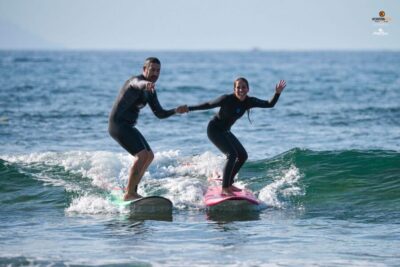
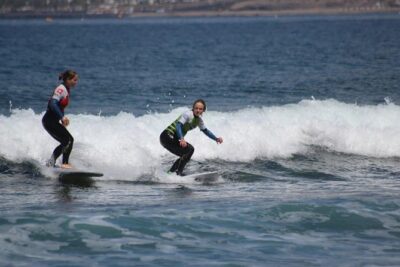
This is a beginner surfing course aimed at kids. The goal is not to make your child a tiny pro. The goal is to help them understand the basics, stand up on small waves, and build water confidence safely.
Here’s what this typically means in real life, given how the camp is described:
- The lesson is held on a sandy beach (again, Playa de Troya), so kids can start in a manageable environment.
- Your child receives the necessary equipment, including a wetsuit and a surfboard.
- They get structured instruction in a small setting, with Spanish and English instructors.
That last part matters more than you might think. Surfing has lots of short commands, like paddle now, look where you’re going, try standing a bit sooner, stay low, and don’t fight the wave. If your child can understand the instructor’s language, they can respond faster, and that speeds up progress.
Even the “win” moments are part of the curriculum. One of the highlights is the excitement when kids stand up and surf the waves. For beginners, that is not just fun, it’s a brain shift. They go from fear and uncertainty to a simple feeling of control.
If you’re worried about whether your kid will feel overwhelmed, the limited group size and the beginner focus are your safety net. It is still the ocean, so there will be waves and wind, but the camp is designed for first-timers.
Beach games that keep motivation high when waves pause
Surfing depends on water conditions and timing. Some minutes bring good sets, others are slower. This camp accounts for that reality by adding beach games during the morning window.
Those games do two practical jobs:
- They keep kids engaged when they are not in the water.
- They build teamwork and energy without turning the day into a waiting game.
You also get a social boost. Kids are doing this alongside other kids their age range, which can reduce that first-time surf awkwardness. Many children try harder when they feel like they’re part of the group, not performing for adults on the shore.
One more practical note: the camp is strict about staying focused. Mobile phones or electronic games are not allowed, and cameras are also not allowed. That might sound tough, but it usually helps the instructors keep attention on instruction and fun. It also means you can pack your child’s day as a full activity, not an activity plus device time.
Learn to read the Atlantic swell
Gear that’s included, plus what you still need to bring
The big parent win here is that Kontraola provides the surf setup. You get wetsuit, surfboard, and surf lesson materials, plus insurance. You do not have to gamble on rental quality or figure out sizing at the last moment.
Still, you need to come prepared with your basics. The camp lists exactly what to bring, and I’d follow it closely:
- Swimsuit and beachwear
- Beach towel
- Change of clothes (fresh clothes after the water is a must)
- Hat and sunscreen (they specifically ask for biodegradable sunscreen)
- Water
- Sports shoes or flip-flops/sandals to walk to the beach
They also suggest sportswear for the day, and flip-flops so kids can move comfortably between the campus and the beach without going barefoot on every surface.
For me, the “change of clothes” part is the make-or-break item. Kids get cold in salt air even on pleasant mornings, and wet clothes can kill the mood fast. Pack an extra shirt or warm layer if your child tends to get chilly.
Also, one safety requirement worth repeating: for surfing, you must know how to swim. That means you should not treat this as a learn-to-swim experience. It’s a surfing experience for kids who can handle basic swimming.
Parents, swim comfort, and the rules that keep kids safe
This camp includes clear rules, and they’re there for a reason. Surfing is fun, but it needs structure when you’re responsible for multiple kids in the ocean.
Here’s what the info tells you directly:
- Kids must be accompanied by an adult, unless you provide prior authorization allowing them to come alone.
- Parents must be reachable at all times for any emergency.
- You should tell instructors about any illnesses or relevant details.
- The use of mobile phones or electronic games is not allowed.
That adult accompaniment detail is important for families with older kids who usually go independent. If you want your child to participate without you physically staying with them, you need the prior authorization. If you do not have it, plan to stay close enough to handle the start and any needs.
Also, you should treat the no devices rule as a feature, not a punishment. When your child is not distracted, the instruction sticks better and the morning stays calmer.
Finally, the camp mentions they are authorized to take appropriate actions in emergencies and that they will let parents know what happened as soon as possible. Knowing that you will be updated helps when you’re the adult watching from shore.
Price and value: what you’re really paying for
The camp price is listed as €40 per day per child, and the request also notes a price around $47 per person. Currency conversions can vary, so check what your booking page shows at checkout.
So is it worth it? Here’s my value breakdown based on what’s included:
- You get a beginner surf lesson designed for kids.
- You get equipment: wetsuit and surfboard.
- You get insurance.
- You get a small group size of up to 6 kids.
- You get more than surf time, since there are beach games too.
What’s not included: drinks or breakfast. Kids should bring these in their backpacks. Transportation is also not included.
If you were to buy or rent a wetsuit and surfboard day after day during a holiday, the cost can add up fast. By bundling gear and instruction into a short 3-hour session, this camp gives you a clear, contained experience. You are also buying a staff-supervised morning, which is hard to replicate by yourselves with kids and unfamiliar shore conditions.
As always, the real test is your child’s comfort with swimming. If they’re ready, you’re buying progress, confidence, and a fun story. If they’re not ready yet, you might feel like you paid to manage anxiety instead of enjoying waves.
Best fit for families with kids who want action, not lectures
This camp is built for kids ages 5 to 13 who are beginners but can swim. If your child is excited by physical challenges, enjoys group games, and likes learning by doing, you’re likely to see great energy.
It’s also a good option if you want a Saturday activity that doesn’t take over your whole day. Three hours is enough to make memories, but short enough that you can still enjoy the rest of Playa Las Américas.
Here are the families who may want to skip it:
- Kids who cannot swim comfortably yet.
- Families who rely on phones to keep kids calm during activities (phones are not allowed).
- Parents who are not able to be reachable during the session.
For the right kid, this is the kind of activity that turns a beach day into a skill day. The camp’s focus on the moment kids stand up on waves is exactly what makes kids believe they can do something new.
Packing checklist for a smooth morning at Playa de Troya
To keep the day easy, pack like you’re preventing problems, not just adding extras. Here’s a practical list based on the requirements:
- Swimsuit ready to go
- Wetsuit comes with the camp, but you still need the right base clothing
- Towel
- Change of clothes in a sealed bag if possible
- Hat
- Biodegradable sunscreen
- Water in an easy-to-carry bottle
- Sports shoes or flip-flops/sandals
- A backpack with drinks and breakfast, since neither is included
A small timing tip: if your child gets fussy when they’re hungry, pack something simple and snackable. You will also want water because salt air and sun can dry kids out quickly.
Also remember the rules about what not to bring: cameras and electronic devices are not allowed, and chewing gum is not allowed.
The booking decision: should you book this Saturday surf camp?
If your child is in the 5 to 13 range and already knows how to swim, I think this camp is a smart buy. You get a beginner lesson on Playa de Troya, a small group setup, and the key equipment is provided. For a short 3-hour Saturday slot, it’s a clean way to get real ocean experience without complicated planning.
Book it if:
- Your kid is excited about standing up and riding small waves.
- You want a structured activity with beach games included.
- You can be reachable and follow the adult accompaniment rules or submit prior authorization.
Skip or reconsider if:
- Your child is not comfortable swimming yet.
- Your family relies on phones for focus during activities.
- You’re hoping for a long, self-directed beach day instead of a coached course.
Overall, this is the kind of kids activity that makes travel feel playful and active. If you come prepared, your biggest question will be which part your kid enjoyed more, the waves or the games.
Just Added to the Costa Adeje Lineup

Playa de las Americas Tours, compared.
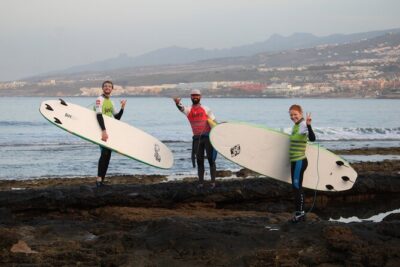
Group Surfing Lesson at Playa de las Américas, Tenerife
Read our review →
Private Surfing Lesson at Playa de las Américas
Read our review →
Group Surf Class in Playa de Las Américas with Photographs
Read our review →
2 hours Semi-private surfing lesson in Playa de Las Americas
Read our review →
Browse the lists this tour appears in