
Reviewed · PLAYA DE LAS AMERICAS TOURS
Playa de las Américas: Private or Small-Group Surf Lesson
Surf your first waves in Tenerife.
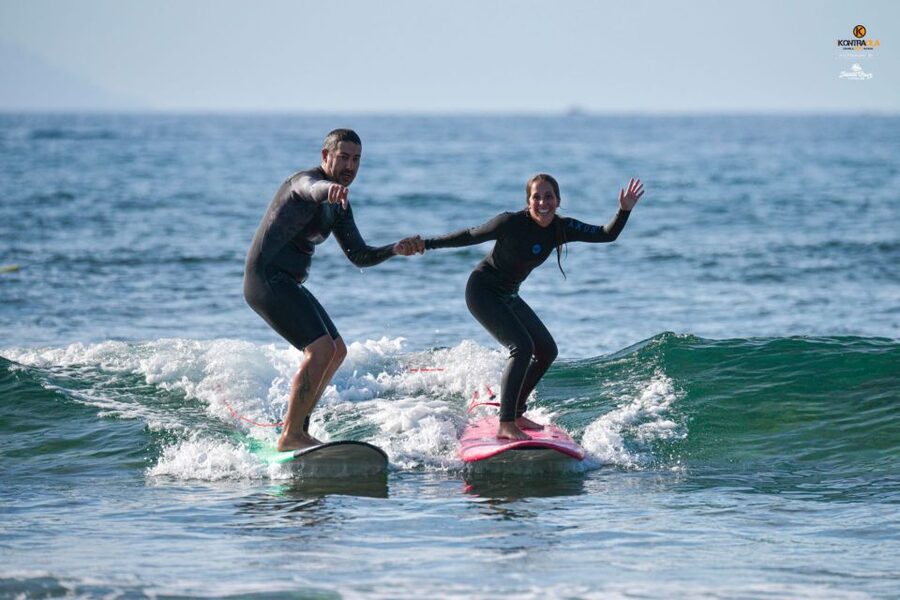
If you want a straightforward way into surfing, this Playa de las Américas lesson is built for real beginners, with coaching, equipment, and a low-tide approach that gives you more room to learn. I like that it mixes a short 20-minute theory block with immediate practice, so you are not stuck only talking on the beach.
Two things I really like: the lesson is structured around low tide for safer conditions, and you are placed with instructors who focus on getting you standing and staying confident in the water. One consideration is that surfing is physical, so even the best first session will still leave you tired.
In This Review
- Key Highlights You’ll Notice Right Away
- Playa de las Américas: A Smart Tenerife Base for First-Time Surfing
- Kontraola Surf School Setup: Check-In, Gear, and What Your $41 Covers
- The 2-Hour Lesson Flow: From Theory on Sand to Waves
- Beachfront Practice, Low-Tide Conditions, and Why They Help You Learn Faster
- Instructors Who Teach the Steps, Not Just the Sport
- Private or Small-Group Surf Lessons: Pick the Right Comfort Level
- What to Bring, What to Expect in the Water, and Post-Surf Comfort
- Timing Tips in Tenerife: Low Tide, Start Times, and Where to Fit It Into Your Day
- Should You Book This Playa de las Américas Surf Lesson?
- FAQ
- How long is the Playa de las Américas surf lesson?
- Where do I meet for check-in?
- Is hotel pickup included?
- What surf gear is included?
- Is accident insurance included?
- What should I bring?
- Do I need to know how to swim?
- What age rules apply for kids?
Key Highlights You’ll Notice Right Away
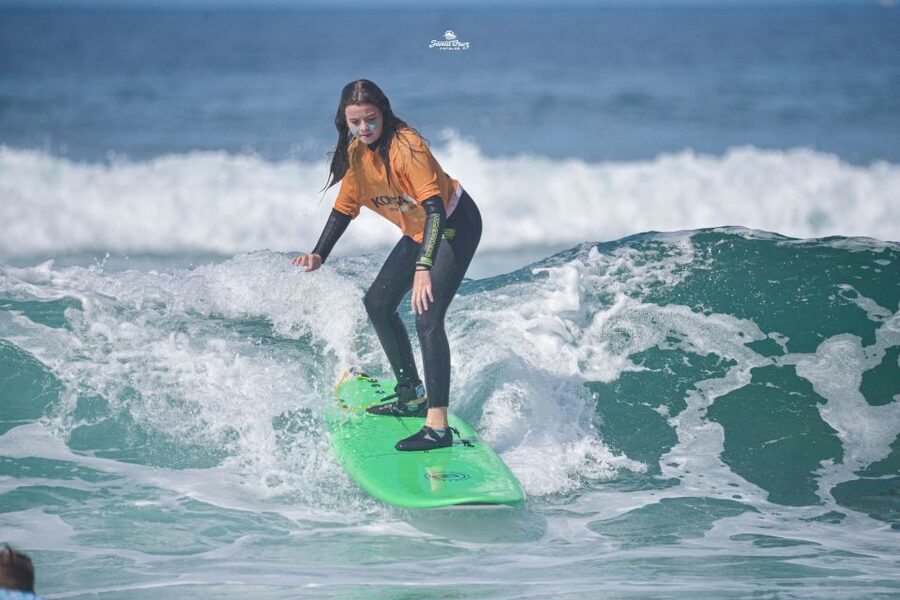
- Low-tide sessions for beginner-friendly conditions and less crowd pressure to scramble for waves
- Gear included: board, wetsuit, reef boots, and lycra, so you can show up prepared
- A real mini-lesson first, with a short theoretical session before you hit the water
- Coaching that corrects your timing, including guidance on when to paddle and how to take the right wave
- Shower and locker access at the school, with gel included for post-surf cleanup
Playa de las Américas: A Smart Tenerife Base for First-Time Surfing
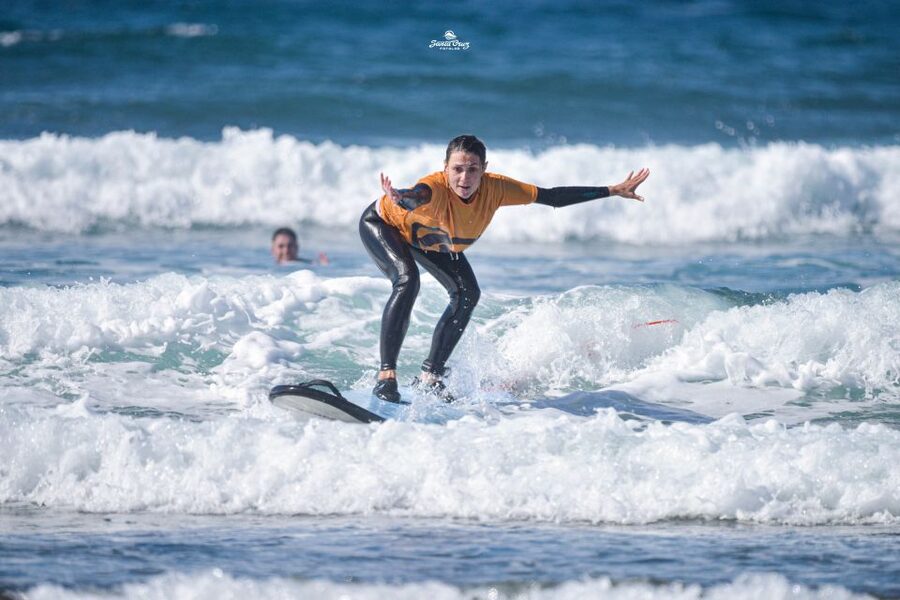
Playa de las Américas is the kind of place where the ocean is always part of the day plan. What makes it great for a surf lesson is that this school runs sessions at low tide, when conditions are often more manageable for learning mechanics like paddling, popping up, and timing.
You also have the comfort advantage of being right on the beachfront. The school’s location means you are close to the water, which sounds minor until you remember how often beginners feel rushed, cold, or overwhelmed when they are far from where the action happens.
And Tenerife itself helps. The water and conditions in this area are set up for surf tourism, so your instructors can keep you focused on the learning goals instead of constantly troubleshooting the basics of where to stand, when to enter, and how to wait safely.
Resort strip, nightlife, and a long beach
- Group Surfing Lesson at Playa de las Américas, Tenerife
★ 5.0 · 1,072 reviews - From Playa de las Américas: Full-Day Teide Jeep Safari
★ 4.7 · 1,056 reviews - Private Surfing Lesson at Playa de las Américas
★ 5.0 · 167 reviews - Group Surf Lesson at Playa de las Américas
★ 5.0 · 110 reviews - Group Surf Class in Playa de Las Américas with Photographs
★ 5.0 · 85 reviews
Kontraola Surf School Setup: Check-In, Gear, and What Your $41 Covers
Your lesson starts at the Kontraola – Tenerife Surf School office in Playa de las Américas. Check in with staff, then they guide you to the beach right in front of the school where your equipment is ready.
The included gear is a big value piece. You get a surfboard, wetsuit, reef boots, and a lycra top, which matters because it helps you stay warm, protected, and steady on your feet. You do not have to guess what to bring, what size to pick, or whether you are missing something important for rocky spots.
You also get three support items that make a difference for peace of mind:
- Accident insurance
- Lockers plus toilets
- Showers with gel in the facilities
On timing and language: the instructors work in Spanish, English, and Italian, so you should be able to understand what they are asking you to do without a ton of guesswork.
One more small but useful detail: the school reconfirms your start time based on the tide. That means you should plan to be flexible, not locked into a strict schedule where you cannot move by 15 to 30 minutes.
The 2-Hour Lesson Flow: From Theory on Sand to Waves
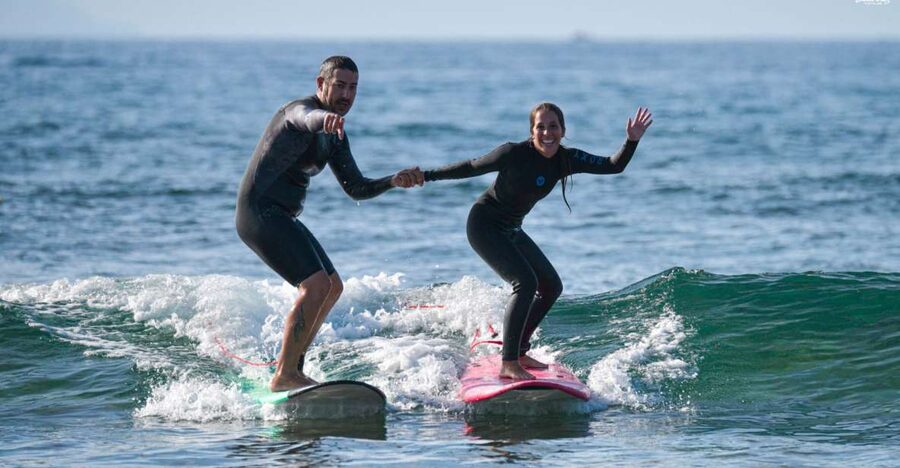
This is not a long workshop. It is a focused 2-hour lesson designed to get you moving quickly and learning in the right order.
Here is the usual flow, the way this lesson is set up:
- Check-in and head to the beachfront
You pick up your gear, then get orientated at the beach in front of the school.
- A 20-minute theoretical lesson
You learn the key basics first, like what you need to do before you paddle out and how to think about wave selection.
- Sand and technique work
You practice movements on land so your body has a chance to remember the sequence. If you have watched surfing videos, this part will make everything feel less random.
- Into the water at low tide
This is the practical section, where instructors guide you to catch waves and stand up, with ongoing corrections.
- On-the-spot coaching as you try
Expect a lot of short feedback, not one lecture repeated every time you wipe out.
From what I see in the teaching style, the goal is fast progress. Instructors help you understand which waves to take and how to build speed with your paddling. They also step in with a push when you are ready, which is especially helpful on your first attempts when you might hesitate at the wrong moment.
Also, do not expect to be on the board every minute. Between setup, breaks, and learning time, you will likely spend part of the lesson waiting for the right wave and resetting. That is normal, and it is actually part of how beginner success happens: you get fewer chaotic attempts, more quality ones.
Beachfront Practice, Low-Tide Conditions, and Why They Help You Learn Faster
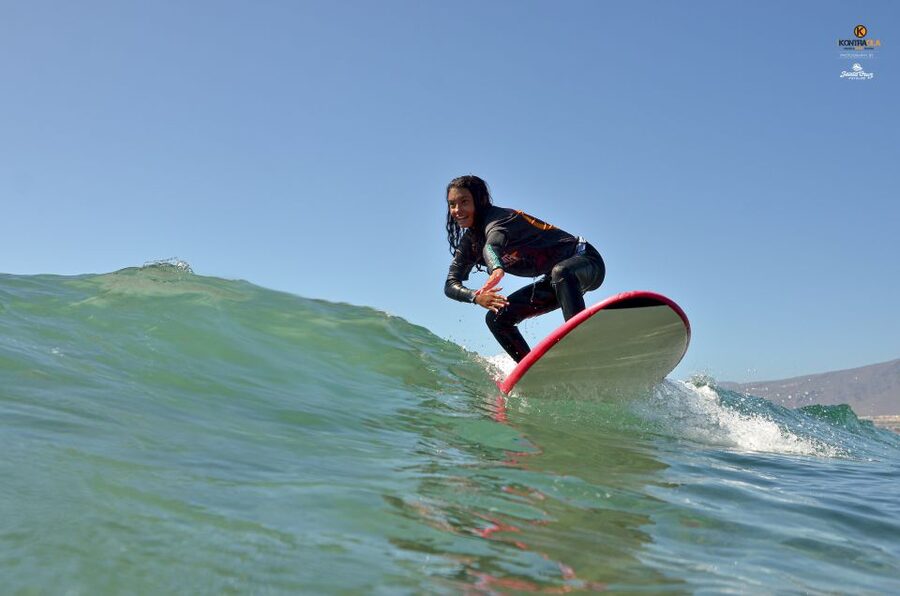
Most first-time surfers struggle with the same things: uncertainty about entry, fear of doing it wrong, and difficulty timing the pop-up. This lesson attacks those problems in a practical way by operating at low tide when conditions are safer and there tends to be more room to work on fundamentals.
Low tide does not mean “easy.” It means more predictable learning. It also reduces the feeling that you are constantly fighting for space, which matters when you are still learning where to sit, when to paddle, and how to turn.
One thing to pay attention to is traction and footing. Reef boots are included for a reason, because stepping near the water can involve slippery areas, including small rocky sections. Wear your reef boots for the whole experience, and slow down around your transitions. That is how you keep the session fun instead of stressful.
Finally, wave choice is a big deal. A good instructor helps you pick waves you can actually ride. When you select the right wave, you get more successful standing moments, and that keeps motivation high.
Learn to read the Atlantic swell
Instructors Who Teach the Steps, Not Just the Sport
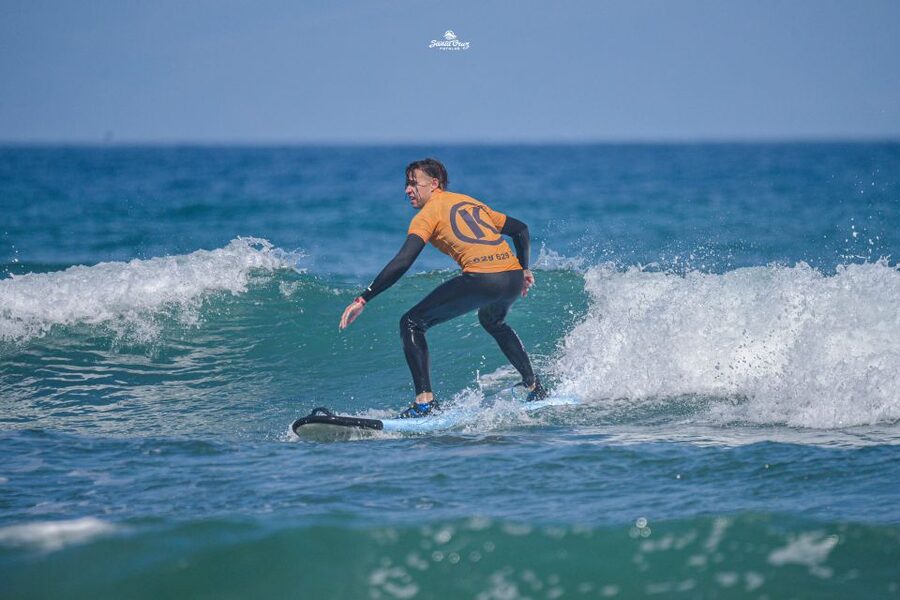
The standout for this surf lesson is instruction quality. The teaching style comes through clearly: instructors are patient, upbeat, and focused on getting you to stand while correcting the exact things that block your progress.
I saw instructors in the school who give very specific guidance. For example, Alejandro-style coaching (for first-timers) focuses on basics on the sand first, then straight into the water, with constant tips and corrections. Victoria’s approach is high energy and encouraging, turning effort into momentum rather than frustration.
Other instructors emphasize the mechanics that beginners miss. Nigel, for instance, helps you with timing so standing on the board becomes possible sooner. And Pablo coaching is attentive to each student’s pace, making sure you get personal help instead of generic group directions.
What ties these styles together is consistent feedback. You are not left to guess why a wave passed under you. You get told what to adjust next time, often right in the moment, so your learning curve is steeper.
If you feel anxious about trying something new in open water, this kind of coaching matters more than flashy promises. Confidence comes from doing the right steps in order, not from random attempts.
Private or Small-Group Surf Lessons: Pick the Right Comfort Level
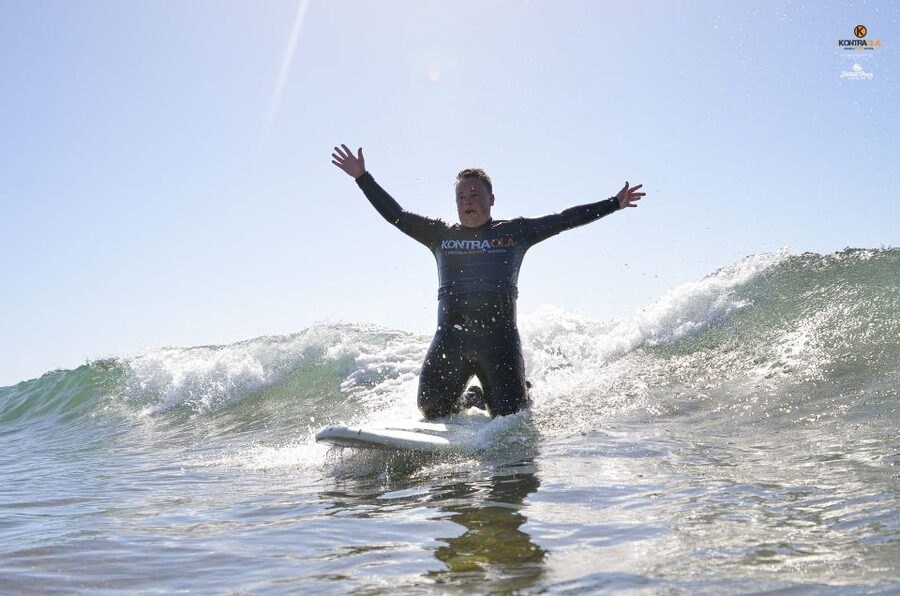
This is offered as private or small groups, and that choice changes how quickly you improve.
Private lessons tend to be best when:
- it is your absolute first time and you want maximum attention
- you are nervous and need reassurance and frequent correction
- you want faster feedback loops, since the instructor can watch every attempt
Small groups are a good middle ground when:
- you want a shared experience with a bit of social energy
- you are still a beginner, but comfortable learning in a small setting
- you want to save money versus full private coaching
There is also a kid policy to understand. Children under 12 must book private lessons. Children under 13 must be in a private lesson alone or with siblings or parents, and they cannot share a group lesson with other adults. If you are traveling as a family, this affects what you should book right away.
What to Bring, What to Expect in the Water, and Post-Surf Comfort
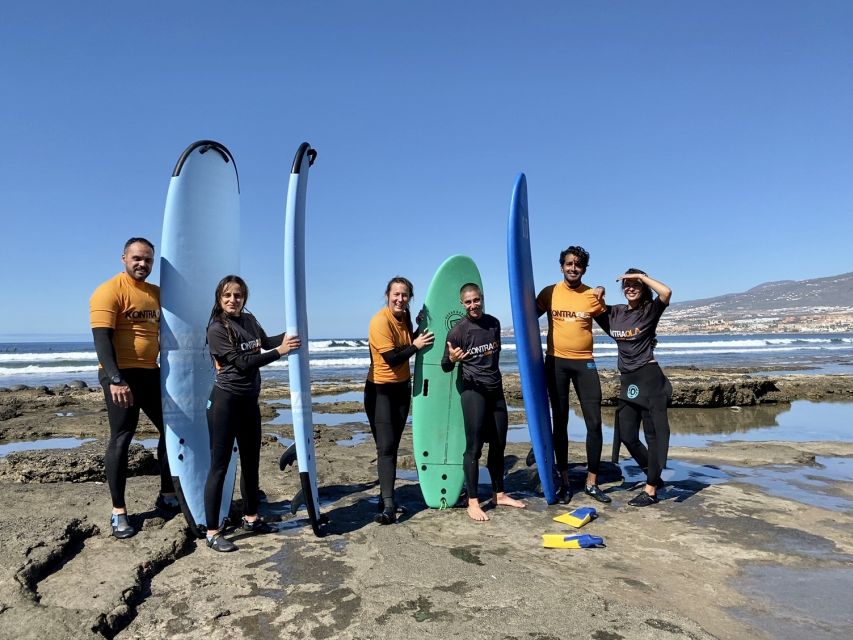
Before you go, the basics are simple:
- Passport or ID card
- Swimwear
- Towel
The school supplies the surf gear, including wetsuit and reef boots, so you mainly need to show up ready to get wet.
What you should expect physically: surfing is tough work. Even first sessions demand strength for paddling and endurance for repeated tries. Many beginners feel it right away. So if you want to enjoy the lesson, go in with the mindset that tired does not mean you failed. It means you did the real part.
After surfing, the convenience perks are real. You can use lockers and toilets, then rinse off with showers and gel. That makes it easier to keep your day moving afterward, instead of just walking around with wet gear and salt on your skin.
Timing Tips in Tenerife: Low Tide, Start Times, and Where to Fit It Into Your Day
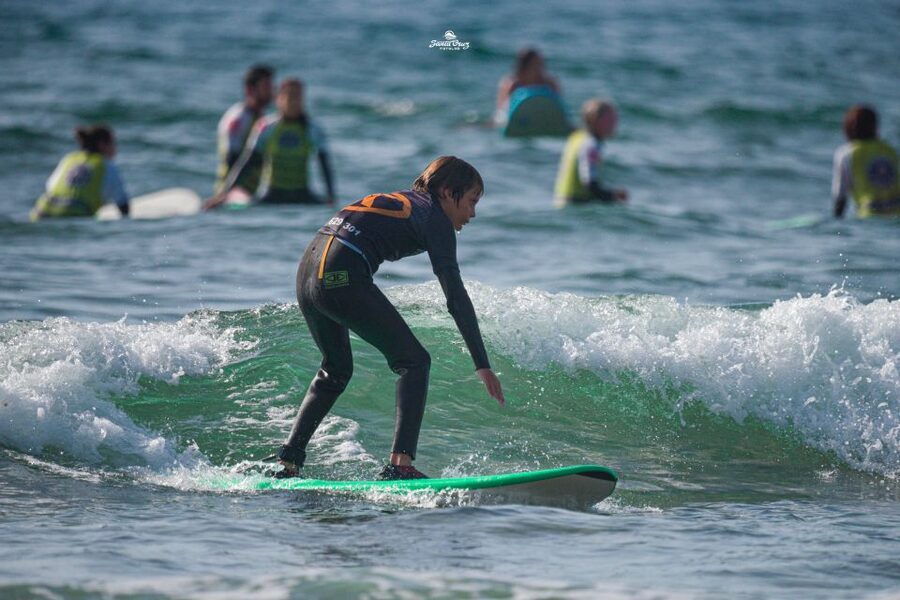
This lesson runs at low tide, and the provider reconfirms the start time depending on the tide. That is actually helpful, but it means you should not schedule another tightly timed activity right before or after.
If you are driving, give yourself extra time to park and arrive a bit early. The whole experience starts at the office check-in, and you will feel better if you are not rushing while you are about to change into a wetsuit.
Also, plan for the reality of surf learning. You might spend time getting instruction, waiting for your turn, and recovering between tries. Build in a buffer so the session feels relaxed, not like it is competing with your schedule.
Should You Book This Playa de las Américas Surf Lesson?
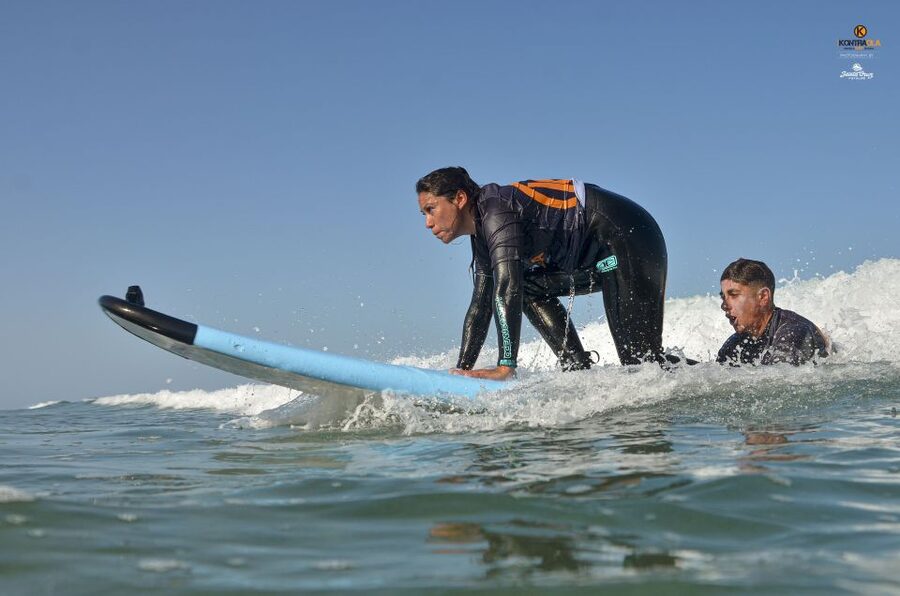
Book it if:
- you are a beginner and want a structured route to your first standing moments
- you like clear coaching and ongoing corrections
- you want included gear, lockers, and showers without extra planning
- you want to surf in Tenerife at conditions set for learning, at low tide
Skip it or reconsider if:
- you are not comfortable in the water, since the lesson is not suitable for non-swimmers
- you are pregnant (not suitable)
- you are over 75 (not suitable)
- you expect a casual, laid-back activity where you do not get physically worked
Value-wise, $41 is reasonable for what you get: certified instruction, accident insurance, a surf package with wetsuit and board, plus the mini-theory component that helps beginners understand what they are doing. If you are choosing between buying gear yourself or paying for coaching, this format is usually the smarter way to learn quickly.
If you want maximum attention for your confidence, choose private. If you want the social vibe while still getting technique help, choose small group.
FAQ
How long is the Playa de las Américas surf lesson?
The lesson lasts 2 hours.
Where do I meet for check-in?
Check in at the Kontraola – Tenerife Surf School office in Playa de las Américas. Staff will show you to the beach in front of the school.
Is hotel pickup included?
No, hotel pickup and drop-off are not included.
What surf gear is included?
You receive a surfboard, wetsuit, reef boots, and a lycra.
Is accident insurance included?
Yes, accident insurance is included.
What should I bring?
Bring your passport or ID card, swimwear, and a towel.
Do I need to know how to swim?
No, this is not suitable for non-swimmers.
What age rules apply for kids?
Children under 12 must book private lessons. Children under 13 must be in a private lesson alone or with siblings or parents, and they cannot participate in group lessons with adults.
Make Something on Tenerife
- Mojo Workshop Cooking Class in Ancient Canarian Village★ 4.9 · 127 reviews
- World Class Fishing Charter Trip in Tenerife★ 4.5 · 110 reviews
- 2 hours Semi-private surfing lesson in Playa de Las Americas★ 5.0 · 78 reviews
- Tenerife: Surf Lesson at Playa de Las Americas★ 4.7 · 76 reviews
- Tenerife / Playa de las Americas Surf lessons All levels★ 4.3 · 75 reviews
Just Added to the Tenerife Lineup


Playa de las Americas Tours, compared.
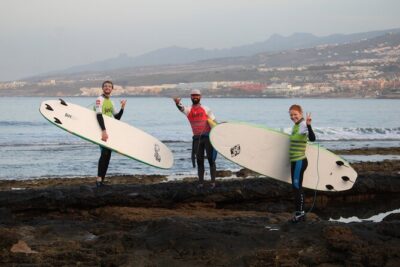
Group Surfing Lesson at Playa de las Américas, Tenerife
Read our review →
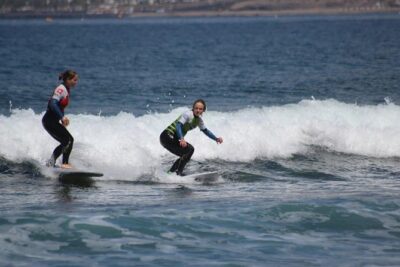
Private Surfing Lesson at Playa de las Américas
Read our review →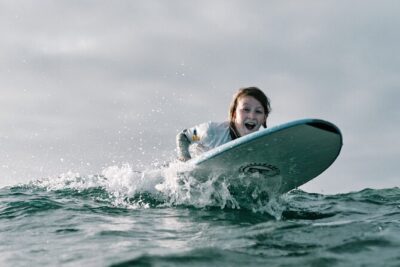
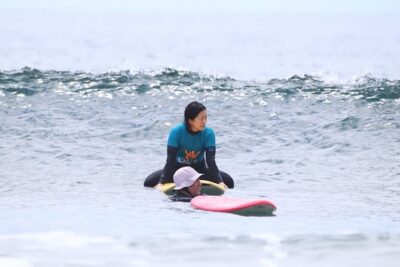
Group Surf Class in Playa de Las Américas with Photographs
Read our review →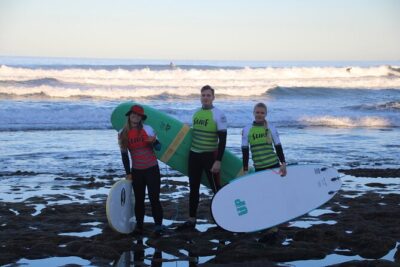
2 hours Semi-private surfing lesson in Playa de Las Americas
Read our review →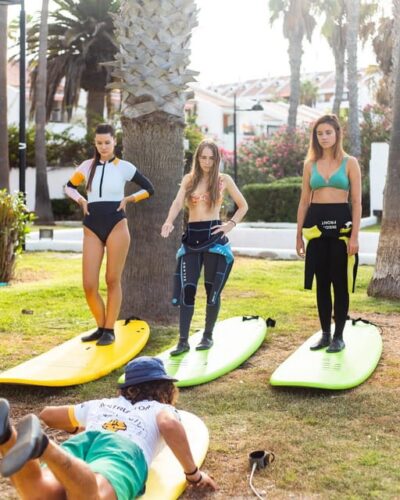
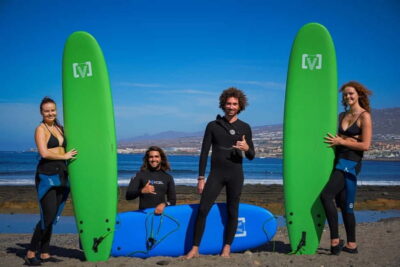
Tenerife / Playa de las Americas Surf lessons All levels
Read our review →Browse the lists this tour appears in