
Reviewed · WHALE WATCHING
Whale Watching and Marine Science Tour
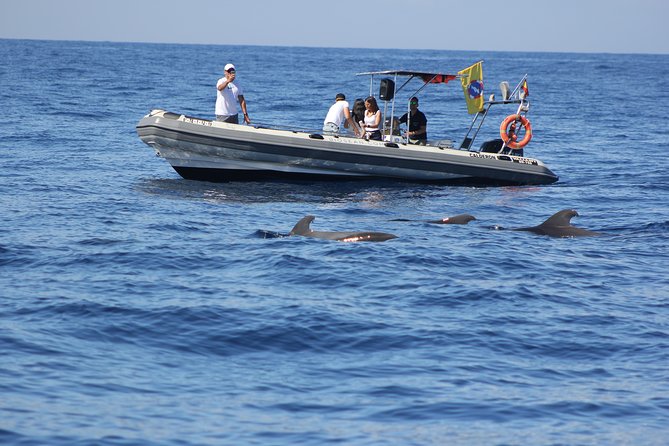
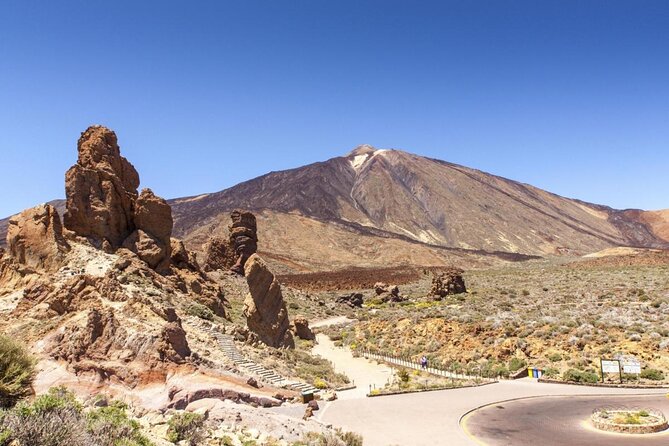
Whales meet science fast in Tenerife. This 2.5 hour outing blends whale watching with hands-on marine tools, so you are not just hoping to spot dolphins. You cruise past the Rasca lighthouse and, when skies cooperate, you also get big-window views toward El Teide.
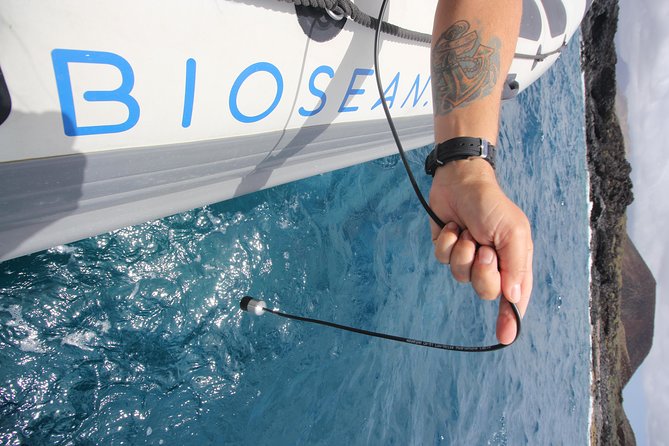
I love two things most. First, you go with a marine biologist guide, and the explanations are built around what you are actually seeing and hearing, with guides such as Raoul, Misa, and Nico mentioned in past experiences. Second, the science part is not a gimmick, you get to work with real gear like a hydrophone and a sound recorder.
One practical consideration: there is no restroom on board, and snacks are not included. So if you have a sensitive stomach to sea time or you tend to snack often, you will want to plan ahead.
In This Review
- Key things that make this Tenerife tour worth your time
- Tenerife whale watching with real marine science tools
- Where you start: Biosean at Marina del Sur, Las Galletas
- Cruising the southern coast: Rasca lighthouse and Malpaís de Rasca
- El Teide from the water: what clear skies change
- The hands-on science part: hydrophone and sound recorder
- What you might see at sea: whales, dolphins, and turtles
- The Rasca and Teide combo works because it keeps you curious
- Price and value: $90.70 for a guided, capped-group science cruise
- Comfort on board: water included, snacks and restroom not
- Best for who? Families, learning types, and respectful wildlife lovers
- Should you book this Tenerife whale watching and marine science tour?
- FAQ
- How long is the Whale Watching and Marine Science tour in Tenerife?
- How much does the tour cost per person?
- What is the maximum group size?
- Where does the tour start?
- What is included in the price?
- What is not included?
- Is the tour offered in English?
- What happens if the tour is canceled due to poor weather?
- What is the cancellation policy for a full refund?
Key things that make this Tenerife tour worth your time
- Max 10 travelers, so questions feel welcome and you are not shouted over
- Hydrophone + sound recorder, a hands-on way to understand whale and dolphin sound
- Marine biologist guide, focused on animal behavior and reading what is happening at sea
- Southern Tenerife route, including the Rasca lighthouse and volcanic formations near Malpaís de Rasca
- Teide Volcano views when clear, a classic Tenerife backdrop from the water
- Bottled water included, with the trip designed to stay comfortable for the full 2.5 hours
Tenerife whale watching with real marine science tools
If you think whale watching is only about spotting spouts, this tour changes the angle. Yes, you are out on the water looking for whales and dolphins. But you also get a marine science layer that helps you make sense of what is going on under the surface.
The marine biologist guide runs the show, and the day is built to be interactive. That hands-on focus matters because it turns a pass-by experience into a guided learning loop: you watch, you listen, you record, then you connect it back to animal behavior. It also explains why this is a favorite for people who actually like learning, plus families with older kids who can follow along and ask questions.
The small group size helps a lot. With a cap of 10 travelers, you are more likely to get a direct response from the guide when something pops up on the horizon.
Other things to do around Tenerife
- Tenerife: Eco-Yacht Whale and Dolphin Watching and Swimming
★ 4.7 · 15,619 reviews - Los Cristianos Respectful No-Chase Whale and Dolphin Safari
★ 4.6 · 12,782 reviews - Costa Adeje: Whale & Dolphin Eco-Cruise with Snacks & Drinks
★ 4.6 · 5,096 reviews - Los Gigantes: Dolphin & Whale Watching Cruise with Swim Stop
★ 4.7 · 4,539 reviews - Costa Adeje: Whale Watching Catamaran Tour with Drinks
★ 4.7 · 3,653 reviews
Where you start: Biosean at Marina del Sur, Las Galletas
You meet at Biosean – Whale watching & marine science at Marina del Sur, Pantalán 4, 38631 Las Galletas, Santa Cruz de Tenerife, Spain. The meeting point is near public transportation, which is handy if you are staying in the south and want an easy start.
The tour ends back at the meeting point, so you are not dealing with a complicated end location or a long ride afterward. With an overall duration of about 2 hours 30 minutes, it is the kind of activity that slots well into a half-day plan, as long as you keep your schedule flexible for sea conditions.
Cruising the southern coast: Rasca lighthouse and Malpaís de Rasca
The route starts with a pass by the southernmost point of Tenerife. That includes the Rasca lighthouse, plus volcanic formations in the protected area known as Malpaís de Rasca.
This part feels more than scenic. When you are on Tenerife, the island’s shape and volcanic history make the sea feel like it belongs to a specific place, not a generic coastline. Passing Rasca and Malpaís de Rasca is a nice setup before the main event because it tells you where you are and why the area matters for marine life.
A drawback here is also simple: volcanic scenery is great, but you cannot control what the water does. If the conditions are rough, your main priority becomes staying safe and comfortable. The good news is the trip is not long, so you are not stuck out there for hours if things turn.
El Teide from the water: what clear skies change
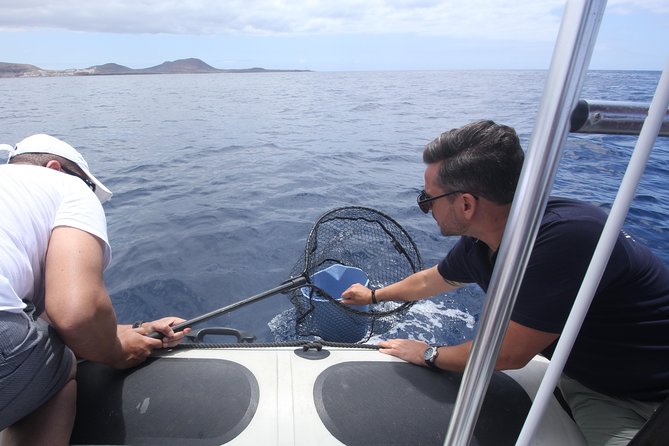
During the tour, you may enjoy a view of El Teide Volcano when the skies are clear. It is one of those Tenerife bonuses that can make the whole experience feel more dramatic without changing the plan.
From the water, Teide has a different scale than from land. You also get a chance to compare the island’s volcanic texture from different angles, which makes the Rasca side of the route click into place visually.
Just keep expectations flexible. Teide views depend on weather, and the tour notes that good weather is required. When skies clear up, this becomes a highlight.
Heading further into Tenerife? Here's what else is nearby.
The hands-on science part: hydrophone and sound recorder
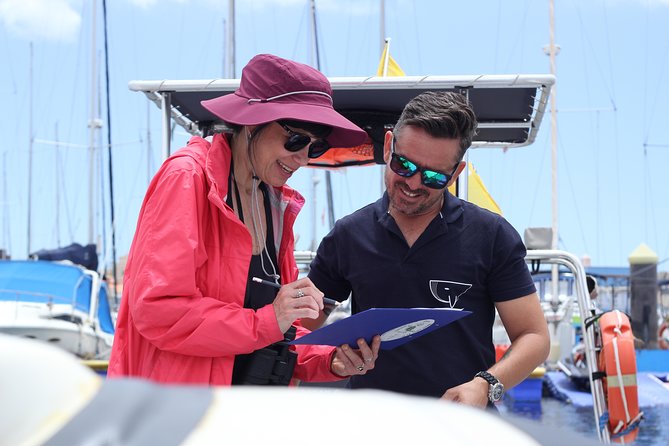
This tour is built around more than sighting. You get hands-on with marine science tools, including a hydrophone and a sound recorder. That is the big quality difference between a basic whale cruise and one that actually helps you understand what animals are doing.
Here is what that means in practical terms. You are not just listening to a story about whales and dolphins. You are using technology to connect sound with animal behavior. The hydrophone is especially important for species that communicate through underwater sounds, because visibility can be limited even when animals are nearby.
In past outings, people have described hearing communication through an underwater microphone and using onboard recording tools to capture sounds. Some groups even mentioned brief moments connected to the water and small conservation actions like picking up debris. None of that removes the focus on safety and respect, and it fits the overall theme: you are learning, not chasing.
If you love science class energy, this is the part you will remember. Even if you are not a marine nerd, hearing the ocean change from silence to signal makes the trip feel like a living lesson.
What you might see at sea: whales, dolphins, and turtles
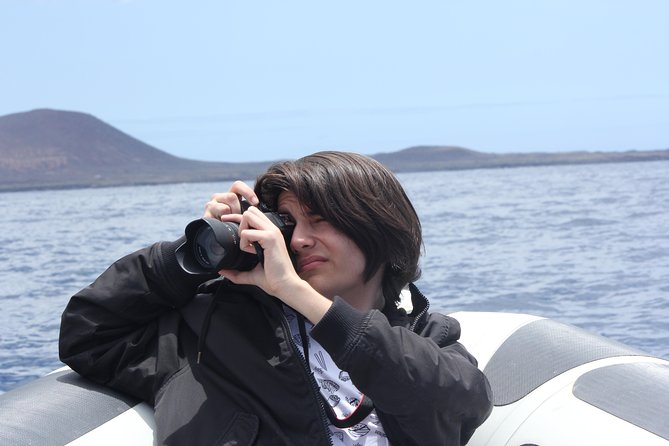
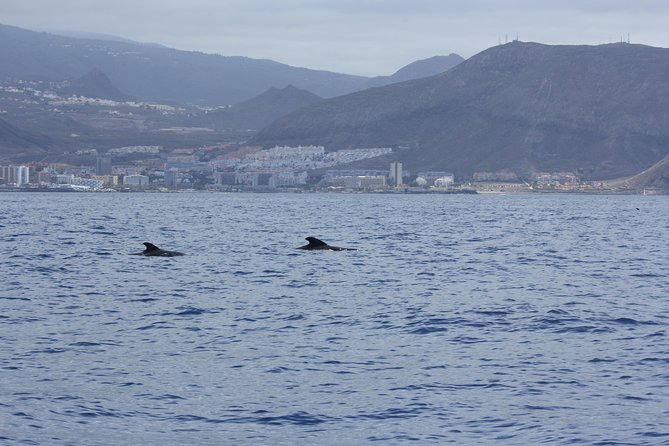
The core promise is straightforward: watch for whales and dolphins with the marine biologist guide. And the operator has a track record that earns strong marks, with many people rating the experience highly and recommending it.
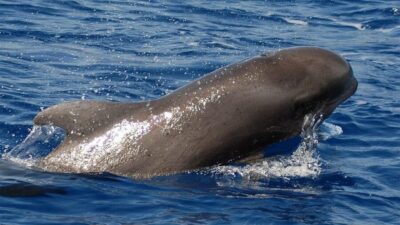
From documented experiences, you could see pilot whales, bottlenose dolphins, Atlantic dolphins, and different types of dolphins such as Grindwale. Some outings also included sightings of other marine life like rays, sharks, flying fish, and turtles.
A real thing to understand is that sightings are never guaranteed. Ocean life moves, and the guide works with what is available that day. That is exactly why the group stays small and the guide stays active. With 10 or fewer travelers, the guide can focus attention, adjust the route, and help you learn what you are seeing as it happens.
One theme that keeps showing up: the guide’s approach feels respectful. People highlighted animal-friendly whale watching and a focus on not disturbing the animals. You want that behavior because it supports both wildlife welfare and your own viewing quality.
The Rasca and Teide combo works because it keeps you curious
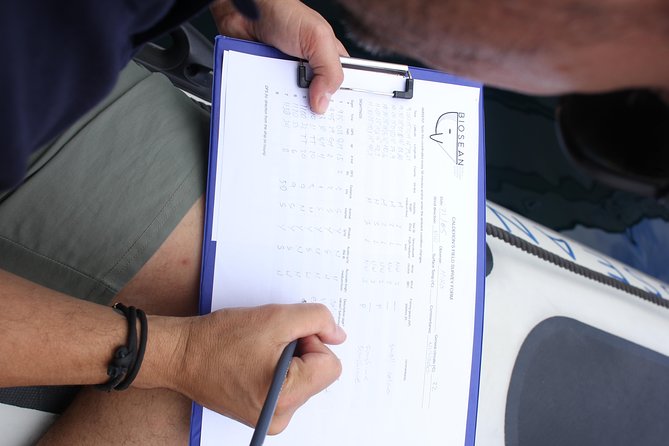
A lot of whale watching tours do the same loop, find animals, point, and go home. This one mixes locations and science so you stay engaged even when sightings are spaced out.
The Rasca lighthouse and Malpaís de Rasca pass get you oriented. Then Teide views give you a Tenerife identity moment. Finally, the hydrophone and sound recording give you a reason to pay attention even when the horizon is quiet.
It is a smart formula. You get scenery, you get animals, and you get understanding. That is why people who like to learn often rate this higher than they expect to.
Price and value: $90.70 for a guided, capped-group science cruise
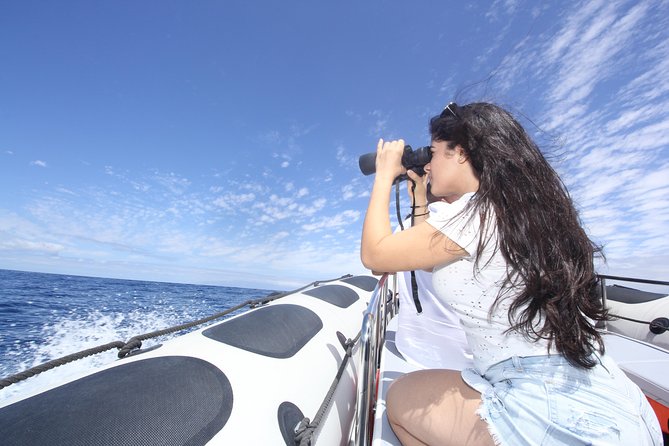
At $90.70 per person, this is not a budget impulse buy. You are paying for three things that matter in real life:
1) A marine biologist guide
A guide who can explain behavior and sound makes the tour feel like education, not just transport.
2) Hands-on equipment
Hydrophone and sound recorder are included, and that tech-based learning is usually where tours either get superficial or get real. Here it is real enough for you to use it.
3) The cap of just 10 travelers
That small-group structure often costs more to run, because it limits how many people can fit into the day. In exchange, you get better interaction and more responsive guidance.
So if your goal is whale spotting only, you might compare prices with cheaper cruises. If your goal is whale watching plus marine science plus better guide interaction, the value starts to make sense quickly.
Also, many people book this trip around three weeks ahead, on average 22 days. That tells me it is popular, especially for people who want the small group and the English-language experience. If you are traveling in busier periods, I would not wait too long.
Comfort on board: water included, snacks and restroom not
The included items are bottled water and all fees and taxes. That is a nice baseline, but it is not a full meal plan.
Two things to plan around: no restroom on board, and snacks are not included. If you want to snack, bring something simple that is easy on the stomach. If you are traveling with kids, do a quick prep like water beforehand and a plan for short breaks before you board.
If you are sensitive to sea time, consider an early time slot if you can. One strong piece of advice in the feedback is to choose the early departure.
Best for who? Families, learning types, and respectful wildlife lovers
This works especially well for:
- People who like science and want to understand whale and dolphin behavior through sound
- Families with older children who can follow along and ask questions
- Whale watchers who care about respectful viewing
- English speakers, because the tour is offered in English
If you only want a relaxing sightseeing cruise with minimal talking, this might be more structured than you expect. If you want to leave with better answers than you arrived with, you will likely feel at home.
Should you book this Tenerife whale watching and marine science tour?
If you are choosing between a standard Tenerife whale cruise and something with real marine tools, I think this is the better bet. The mix of a marine biologist guide plus hands-on hydrophone and sound recorder is the deciding factor. The small group cap of 10 also makes the experience feel more personal without turning it into a rushed stampede.
Book it when you:
- want whale watching with a learning focus
- appreciate small groups and Q and A time
- like the idea of hearing underwater sound, not just spotting animals
Skip it or reconsider if:
- you need a restroom on board
- you are only interested in a lowest-cost cruise
- your schedule is tight and you cannot flex for weather, since good weather is required
If you do book, plan your snacks and timing around the 2.5 hour format. Then show up ready to look, listen, and ask. This is the kind of tour where the ocean feels like it has a language, and you finally get the translator.
FAQ
How long is the Whale Watching and Marine Science tour in Tenerife?
It lasts about 2 hours 30 minutes.
How much does the tour cost per person?
The price is $90.70 per person.
What is the maximum group size?
The tour has a maximum of 10 travelers.
Where does the tour start?
The meeting point is Biosean – Whale watching & marine science, Marina del Sur, Pantalán 4, 38631 Las Galletas, Santa Cruz de Tenerife, Spain.
What is included in the price?
Bottled water and all fees and taxes are included.
What is not included?
There is no restroom on board, and snacks are not included.
Is the tour offered in English?
Yes, the tour is offered in English.
What happens if the tour is canceled due to poor weather?
If it is canceled because of poor weather, you will be offered a different date or a full refund.
What is the cancellation policy for a full refund?
You can cancel up to 24 hours in advance for a full refund. If you cancel less than 24 hours before the start time, the amount paid is not refunded.
Just Added to the Tenerife Lineup
Whale Watching, compared.
Eco-Yacht Whale and Dolphin Watching and Swimming
Read our review →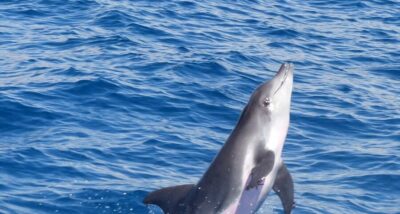
Los Cristianos Respectful No-Chase Whale and Dolphin Safari
Read our review →
Whale & Dolphin Eco-Cruise with Snacks & Drinks
Read our review →
Dolphin & Whale Watching Cruise with Swim Stop
Read our review →
Whale & Dolphin Watching Cruise with Swim Stop
Read our review →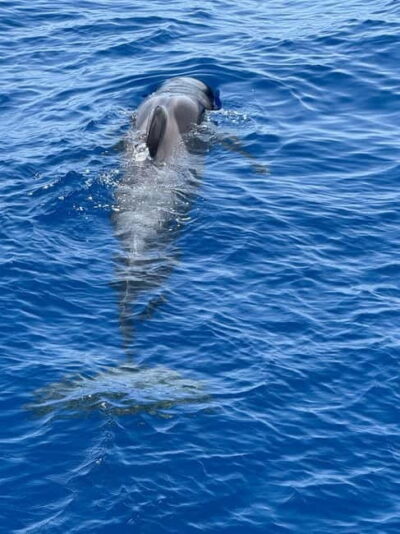

Whale & Dolphin Watching with Drinks and Snacks
Read our review →Browse the lists this tour appears in