
Reviewed · TEIDE STARGAZING TOURS
Walking tour under the stars on Teide guided by astronomers
Few things beat stars in Teide country. This 2.5-hour guided night walk pairs a low-effort path with real astronomy guidance, so you’re not just looking up, you’re learning as you go. I like that it’s timed to the 7:30 pm start, when the sky is dark enough to matter.
I also love the structure: two astronomy stops with breaks to pause, look, and ask questions. The walk stays friendly for most people, with a very low difficulty route and a pace built for contemplation rather than marching. One possible drawback is simple but important, this experience needs good weather, and transport isn’t included, so you’ll want a plan for getting to the meeting point.
In This Review
- Key highlights you will feel during the walk
- Teide at night: why 7:30 pm is the right moment
- Meeting point at Paradores Cañadas del Teide: plan your arrival
- Two stops under the stars: Teide National Park and Los Roques de Garcia
- Stop 1: Teide National Park
- Stop 2: Los Roques de Garcia
- Milky Way or moonlight guidance: how the guide adjusts
- What you will learn in 2.5 hours, without the lecture vibe
- Walking pace and difficulty: why low effort is a real feature
- Price and value: $28.40 for an astronomy-led night out
- Language, tickets, and small practical stuff that matter
- Who should book this walk, and who might want another option
- Should you book this Teide guided stargazing walk?
- FAQ
- What is the duration of the stargazing walking tour?
- What time does the tour start?
- Where do I meet for the tour?
- Is transportation included?
- What languages is the tour offered in?
- How many people are in the group?
- Is the tour dependent on weather, and what happens if it’s canceled?
- Can I bring a service animal?
Key highlights you will feel during the walk
- Astronomer-led guidance focused on what you can see with the naked eye
- Two stops: Teide National Park and Los Roques de Garcia
- Milky Way or moonlight route depending on conditions in the sky
- Very low difficulty, built for a mixed group
- Small group size with a maximum of 20 people
- Mobile ticket and an English-language experience
Teide at night: why 7:30 pm is the right moment
There’s a specific kind of quiet that happens outdoors after sunset, and Teide’s area tends to make it feel extra dramatic. At 7:30 pm, you’re set up to use the dark sky instead of just watching it arrive. That timing matters because you want enough night on the clock for stars and the Milky Way to actually show up.
The best part is that the walk isn’t treated like a random stroll. The guide is there as an astronomy translator, turning what you see into something you can recognize. In one set of feedback, guide Isaac gets called out as a great host, and that matches what you’re hoping for, clear explanations at an easy pace.
One of the clearest night skies anywhere
- Tenerife: Teide National Park Sunset & Stargazing Tour
★ 4.2 · 3,812 reviews - Tenerife: Sunset and Stargazing at Teide National Park
★ 4.7 · 2,826 reviews - Teide National Park Sunset & Stargazing with Dinner (Star Safari)
★ 5.0 · 2,601 reviews - Teide National Park: Sunset & Stargazing Safari with Dinner
★ 4.6 · 2,115 reviews - Teide by Night: Sunset & Stargazing with Telescopes Experience
★ 4.5 · 1,492 reviews
Meeting point at Paradores Cañadas del Teide: plan your arrival
The tour starts at 38300 Paradores Cañadas del Teide, Santa Cruz de Tenerife, Spain. That’s helpful because you can map it, but you should still give yourself margin, especially if you’re coming in from another part of the island.
One thing to know early: transport is not included. So, you’ll need to handle your own ride, whether that means a pre-booked transfer, a taxi, or your own vehicle logistics. Arriving on time is the difference between settling in calmly and rushing when you’d rather be looking up.
The good news is the experience is built for real participation. Most travelers can take part, it’s designed for a low difficulty walking pace, and service animals are allowed.
Two stops under the stars: Teide National Park and Los Roques de Garcia
This walk keeps things simple with two main stops, and that’s part of why it works. You get enough time to feel the sky in one place, then you shift to another viewpoint for variety and continued learning.
Stop 1: Teide National Park
Your first astronomy session is in Teide National Park, a setting that makes it easier to focus on the sky instead of distractions. Here, you’ll do the classic stargazing rhythm: pause, look with the naked eye, and get explanations that help you connect dots between stars and patterns.
What I like about starting in a major park is that the place itself helps the mood. You’re not trying to learn astronomy in a bright, busy setting. The walk includes stops for explanations and quiet sky watching, so this first segment is where you usually get your bearings.
Possible consideration: if visibility is limited, your first stop might lean more toward what the guide can still teach you under less-than-ideal conditions. That’s not the tour’s fault, it’s just how nighttime observing works.
The volcano that gives the island its shape
Stop 2: Los Roques de Garcia
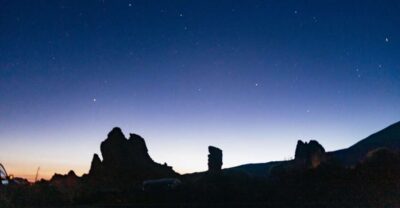
Then you head to Los Roques de Garcia, which keeps the experience from feeling repetitive. Even when the main focus is the sky, shifting location can change how comfortably you look around and how much of the horizon you can consider.
This second stop also helps you practice what you learned. After the guide has introduced you to what to look for, you get another chance to apply it right away. If you’re trying to recognize constellations, this is where the ideas often start to stick.
Possible drawback: because the route is outdoors at night, your enjoyment will depend on how steady the weather is. The tour requires good weather, and nighttime conditions can affect comfort and viewing.
Milky Way or moonlight guidance: how the guide adjusts
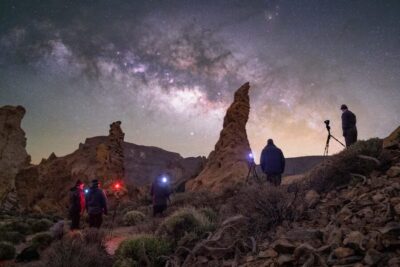
The experience is described as walking under the stars where you might catch the Milky Way, or you might be guided by moonlight along the path. That’s a big deal because it changes the whole viewing style.
If the Milky Way is visible, you’re in for a visual hit that’s hard to get from normal city skies. If it’s more moonlit, the sky can still be surprisingly usable, but your guide’s job shifts toward helping you interpret the stars and constellations you can see clearly.
I find this flexible approach smart. It respects reality. Instead of promising a specific star show no matter what the sky does, it sets you up with a plan for different nighttime conditions. Your payoff is still the same, you leave understanding more about what you saw.
Also, the guide is the translator here. You’re not expected to know the sky in advance. The goal is simple: you recognize constellations, understand what you’re looking at, and enjoy the slow rhythm of looking up.
What you will learn in 2.5 hours, without the lecture vibe
This is not a long, heavy class. The duration is about 2 hours 30 minutes, and the format is built around short explanations paired with actual looking. That matters because astronomy knowledge sticks better when you’re seeing the subject live.
Across the walk, you can expect times where the group stops for explanations, then spends a bit of time contemplating the sky with the naked eye. It’s hands-on in the best way, you learn by doing, not by memorizing.
If you’re the type who normally points at the sky and shrugs, you’ll likely feel the change fast. The guide helps you get from random dots to recognizable patterns. The end goal is that you can identify constellations you didn’t know five minutes earlier.
And yes, the guide quality really shows in how smooth this feels. In the feedback provided, Isaac is specifically described as a great host and someone who helps you learn a lot. That aligns with what you want on a night walk, a guide who can keep it clear while the group is standing still and adjusting their eyes to the dark.
Walking pace and difficulty: why low effort is a real feature
The route is labeled very low difficulty, and that’s honestly one of the most underrated parts of night tours. Stargazing can be awkward if you’re racing uphill or stepping quickly while trying to read the sky. A calmer pace keeps you present.
Because the tour includes stops, you’ll spend time standing still or moving slowly. That’s exactly when it helps that it’s suited for everyone. You should feel like you’re watching the sky, not doing a workout disguised as astronomy.
Group size is also capped at 20 travelers. That tends to make the guide’s explanations easier to follow and keeps the group from turning into a noisy queue. If you want questions answered, smaller groups make it more realistic.
Price and value: $28.40 for an astronomy-led night out
At $28.40 per person, this is positioned as a value-friendly way to access Teide-area astronomy. The key isn’t just the price, it’s what’s included versus what you have to bring yourself.
You’re paying for an expert astronomy guide and the guided experience itself. You’re not paying for private transport, because transport isn’t included, and you’ll need to plan that separately.
So the cost makes sense if you can already get to the meeting point. If you’re staying somewhere nearby or you can arrange an easy ride, the deal gets better because your total out-of-pocket stays close to what’s listed. If you’ll need a long, expensive transfer, factor that into your real budget.
In a nutshell: for a 2.5-hour guided stargazing walk with two stops, dark-sky time, and constellation-focused explanations, it’s priced like an activity rather than a full-day expedition.
Language, tickets, and small practical stuff that matter
The tour is offered in English, and you’ll receive a mobile ticket. That’s a relief if you’re traveling light and prefer to keep things on your phone.
Confirmation is provided at the time of booking, so you aren’t stuck waiting for a separate email chain. For anyone trying to coordinate evening plans, that kind of clarity reduces stress.
If you’re traveling with a service animal, you’re covered since service animals are allowed. That’s one more reason this feels built for broad participation instead of a niche, only-for-experts activity.
Who should book this walk, and who might want another option
This tour is a great fit if you want a gentle introduction to the night sky. You don’t need to be an astronomy fan. You just need curiosity and a willingness to look up.
It also suits couples, friends, and solo travelers who enjoy guided structure. The small group size and the two-stop format make it feel personal enough to stay engaged, even though you’re outside.
I’d consider a different kind of experience if you hate waiting in the dark. This tour includes contemplation time, and you will spend parts of it standing and looking rather than walking nonstop. It’s also weather-dependent, so if you’re visiting during a period where conditions are unreliable, you should expect the day to possibly shift.
Should you book this Teide guided stargazing walk?
Book it if you want a guided night sky experience that feels doable. The combination of astronomer explanations, a very low difficulty route, and a two-stop plan makes it an efficient way to learn something real without turning it into a marathon.
I’d especially recommend it if you’re excited about recognizing constellations and learning how to look with the naked eye. And if you’re hoping for a guide who’s comfortable hosting and teaching, the mention of Isaac as a standout host is a good sign that the atmosphere is friendly and clear.
Skip it only if you can’t handle outdoor nighttime viewing or you know your schedule won’t tolerate weather changes. The tour requires good weather, and that’s the one variable you can’t control.
FAQ
What is the duration of the stargazing walking tour?
The tour lasts about 2 hours 30 minutes.
What time does the tour start?
The start time is 7:30 pm.
Where do I meet for the tour?
The meeting point is 38300 Paradores Cañadas del Teide, Santa Cruz de Tenerife, Spain.
Is transportation included?
No. Transport is not included.
What languages is the tour offered in?
The tour is offered in English.
How many people are in the group?
The activity has a maximum of 20 travelers.
Is the tour dependent on weather, and what happens if it’s canceled?
Yes, it requires good weather. If it’s canceled due to poor weather, you’ll be offered a different date or a full refund.
Can I bring a service animal?
Yes. Service animals are allowed.
More Walking Tours in Tenerife
- Tenerife: Underwater Walk – Sea Trek Experience★ 5.0 · 237 reviews
- Sea Trek Underwater Walk in Tenerife – No Swimming Required★ 5.0 · 95 reviews
- Tenerife: Stargazing Walk in Teide National Park★ 4.8 · 28 reviews
- Tenerife Wonder Walk★ 5.0 · 19 reviews
- Silent Disco Walking Tours★ 4.5 · 12 reviews
Just Added to the Tenerife Lineup
Teide Stargazing Tours, compared.
Teide National Park Sunset & Stargazing with Dinner (Star Safari)
Read our review →
Teide National Park: Sunset & Stargazing Safari with Dinner
Read our review →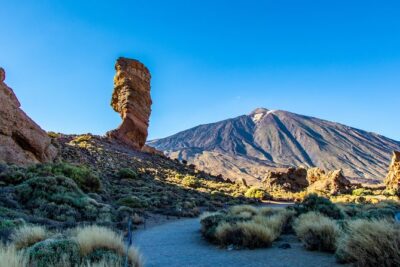
Teide by Night: Sunset & Stargazing with Telescopes Experience
Read our review →
Teide: Guided Sunset & Stargazing Tour by Night with Dinner
Read our review →
Teide Night Experience with Dinner and Stargazing
Read our review →Browse the lists this tour appears in