
Reviewed · MOUNT TEIDE TOURS
Tenerife: Mount Teide Observatory Guided Tour
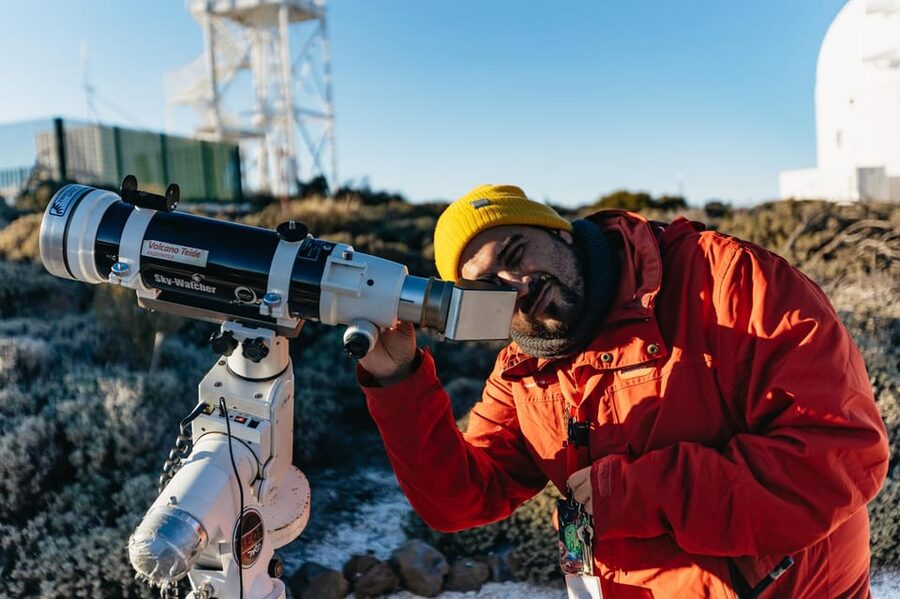
The sky above Tenerife looks different at 2,400 meters, and this tour turns that altitude into a front row seat for astronomy. I like that you get hands-on viewing through professional solar telescopes, plus a guide who helps you connect what you see to the real work of astrophysicists. I also love that it is not just a talk, you actually look through two different instruments during the visit.
The biggest consideration is physical and weather related: the observatory sits high, oxygen is thinner, and the tour involves walking on gravel paths outdoors. If you have respiratory issues or general mobility limits, this may not be a good fit.
In This Review
- Key Teide Observatory Takeaways Before You Go
- Entering the Mount Teide Observatory Experience: What This Tour Really Gives You
- Teide Altitude and the Walk on Gravel Paths: Plan for Comfort
- The Tour Flow: Video Intro, Telescope Basics, Then the Real Viewing
- Two Solar Telescopes: Sunspots and Solar Flares Up Close
- Walking Past a Night Telescope: How Teide Looks for Dark Skies
- Views From Teide: The Sky, the Structures, and the Wait Between Stops
- Price and Value: Is $25 for 1.5 Hours a Good Deal?
- Who Should Book This Teide Solar Observatory Tour?
- Should You Book This Mount Teide Observatory Guided Tour?
Key Teide Observatory Takeaways Before You Go
- Two solar views, two telescope purposes: sunspots through one solar scope, solar flares through another.
- You learn how observatories run: you get an intro to the facility, then a night sky explanation and telescope workflow.
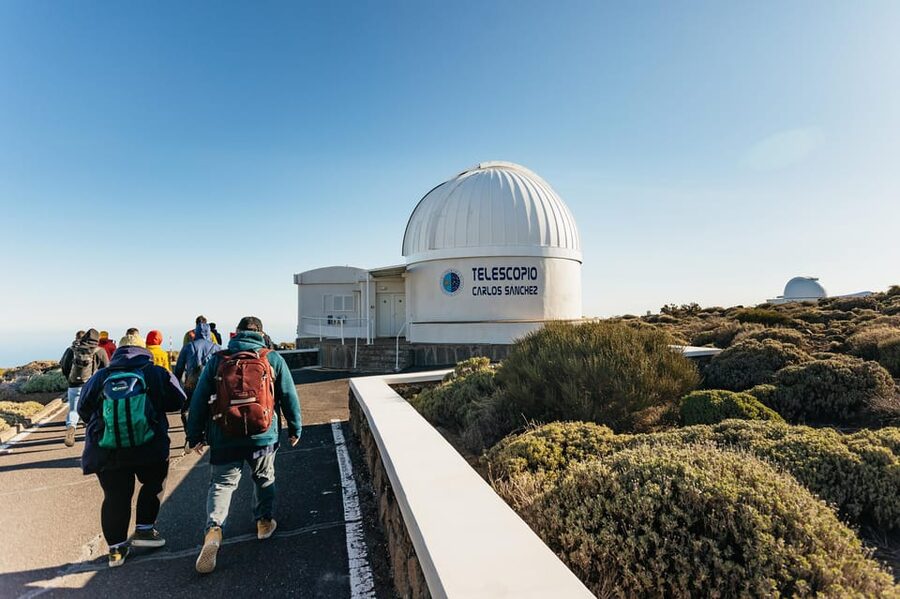
- A night telescope stop, even on a daytime tour: you go see one of the nocturnal telescope installations.
- Cold can sneak up fast: warm layers matter at altitude, even when the Sun feels strong.
- Guides bring it to life: names like Raquel, Jesus, and Steffi show up in the guide lineup for enthusiastic, clear explanations.
Entering the Mount Teide Observatory Experience: What This Tour Really Gives You
Mount Teide is the kind of place where you understand why scientists chase the sky. The air is thinner, the light is intense, and the observatory is built for serious observation. What I like about this guided tour is that it treats astronomy as something you can follow step by step, not just something you watch from a distance.
You start with an introduction to how the observatory is laid out and what each area is for. Then you move into the core of the experience: you watch a short video about the Canary Islands sky and how telescopes work at night. Even though the focus is solar observing, that night-science context helps you understand why observatories are designed the way they are, and why timing and optics matter.
The tour is 1.5 hours long, which is a practical length. Long enough for a real guided flow, short enough that you can still enjoy Tenerife afterward. Guides are available in English, Spanish, German, and French, so you can pick a language that keeps the science clear.
There is a simple reason this feels worth doing at a place like Teide: you are not only hearing about the Sun. You are seeing it through professional equipment designed for safe solar viewing, which is hard to replicate on your own.
One more thing I appreciate is that the staff set expectations for safety and comfort. At altitude, the Sun can feel deceptively powerful, and shade can feel genuinely cold. That blend shows up in what you are asked to bring and how you move around the grounds.
The volcano that gives the island its shape
- Tenerife: Mount Teide Tour with Cable Car Ticket & Transfer
★ 4.3 · 5,094 reviews - Tenerife: Teide National Park Sunset & Stargazing Tour
★ 4.2 · 3,812 reviews - Tenerife: Sunset and Stargazing at Teide National Park
★ 4.7 · 2,826 reviews - Teide National Park Sunset & Stargazing with Dinner (Star Safari)
★ 5.0 · 2,601 reviews - Teide National Park: Sunset & Stargazing Safari with Dinner
★ 4.6 · 2,115 reviews
Teide Altitude and the Walk on Gravel Paths: Plan for Comfort
The observatory is at about 2,400 meters above sea level. At that height, oxygen is reduced. The tour does not pretend that altitude is a non-issue, and you should not either.
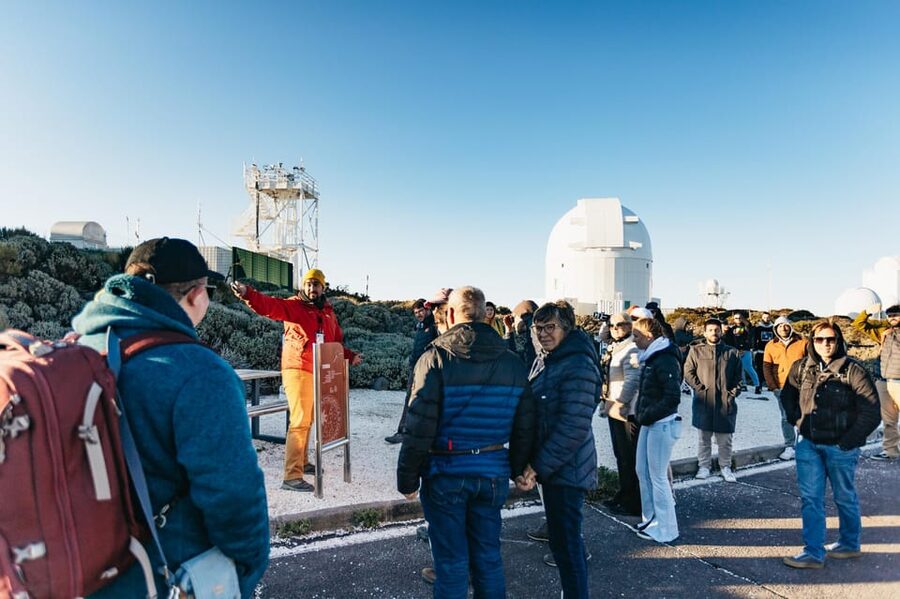
Groups move around within the observatory on gravel paths. That means your footing matters, especially if you are traveling in comfortable-but-not-grippy shoes. If you have anemia, cardio problems, or respiratory conditions, the information you are given says it is not recommended. This is one of those cases where “might be fine” is not a good gamble. Listen to your body and be honest about how you react to altitude.
Weather is its own factor. Even on bright days, the Sun does not heat everything evenly up high. You can get strong light, then wind or cold once you step into shade near telescope structures. If you have ever been cold at the beach but still felt sunburn risk, you will recognize the pattern here, just with more altitude.
What to bring is spelled out clearly: warm clothing, sunglasses, sunscreen, and comfortable clothes. For kids, bring a passport or ID card to confirm age, and note that the tour is not suitable for children under 8.
Practical tip: dress in layers you can manage during outdoor waiting periods. One review comment mentioned the idea of sun protection while waiting, so it helps if your kit includes both sun and warmth. If you tend to get chilly fast, add a hat or extra layer so you are comfortable even if you spend some time outdoors.
The Tour Flow: Video Intro, Telescope Basics, Then the Real Viewing
The pacing is part of the value. You are guided through the observatory areas first, so when you reach the telescopes, it feels like the pieces connect. That matters because solar observing has rules. You cannot casually point a device at the Sun and hope for the best, and this tour is set up to teach you that safety is built into the equipment.
A short video covers the Canary Islands sky and how the scopes work at night. That part is easy to skip over in your mind if you think you are only here for sun viewing, but it helps you understand the difference between observing in daylight and observing after dark. It also sets up why a nocturnal telescope stop exists on the itinerary, even though the Sun is still the main star during your time there.
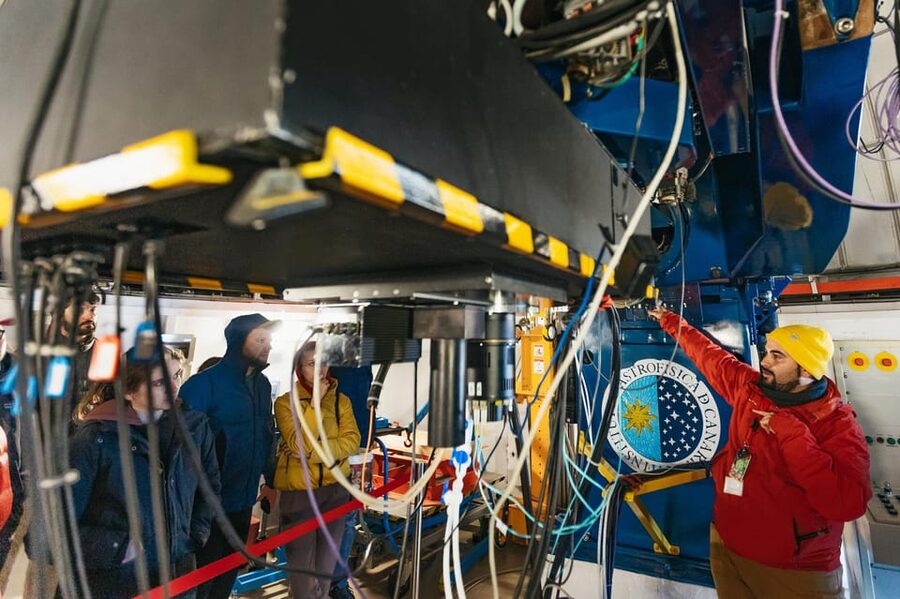
Then you join the guide for a tour through the facility. Expect a mix of explanation and practical demonstration. In particular, the guide keeps the science approachable by tying telescope functions to what you are actually going to see.
Guide personalities seem to be a big part of how the tour lands. Names like Raquel and Jesus show up in people’s experiences as enthusiastic, funny, and able to answer questions. If you ask questions, you can get more than a script read, which is one reason the reviews skew so positive.
Two Solar Telescopes: Sunspots and Solar Flares Up Close
This is the heart of the experience, and it is also where you should go in with the right expectations. You are not going to see the Sun like it looks in movies. This is science observing with filters and optics, designed for safe viewing. The payoff is that you can see solar features clearly enough to learn from them.
You will observe the Sun through two different solar telescopes. One is set up to show sunspots. The other is for solar flares. That matters because sunspots and flares are different manifestations of solar activity, and seeing them through separate setups gives you a real sense of how astrophysics works with specific observational targets.
One of the guide-led explanations you can expect is what each view is meant to highlight. Sunspots are dark regions tied to magnetic activity, while flares relate to intense energy release. When a telescope is configured for a specific phenomenon, the contrast and filters make the feature readable for you.
It also helps that this tour is designed around professional instruments, not small demo scopes. That safety and calibration is the difference between “cool idea” and “real observation session.” You get the guided instructions and the equipment ready to do the job.
A practical note: bring sunglasses and keep sunscreen on. Even when you are using filtered telescopes, the rest of the time can be spent outside under intense sun. At altitude, the Sun can be serious.
If you are a beginner, this tour is a good first step. If you already like astronomy, it is still satisfying because it turns solar science into something tangible. You are not just learning terminology, you are connecting the terms to what your eyes are seeing through the scope.
Other things to do around Tenerife
Walking Past a Night Telescope: How Teide Looks for Dark Skies
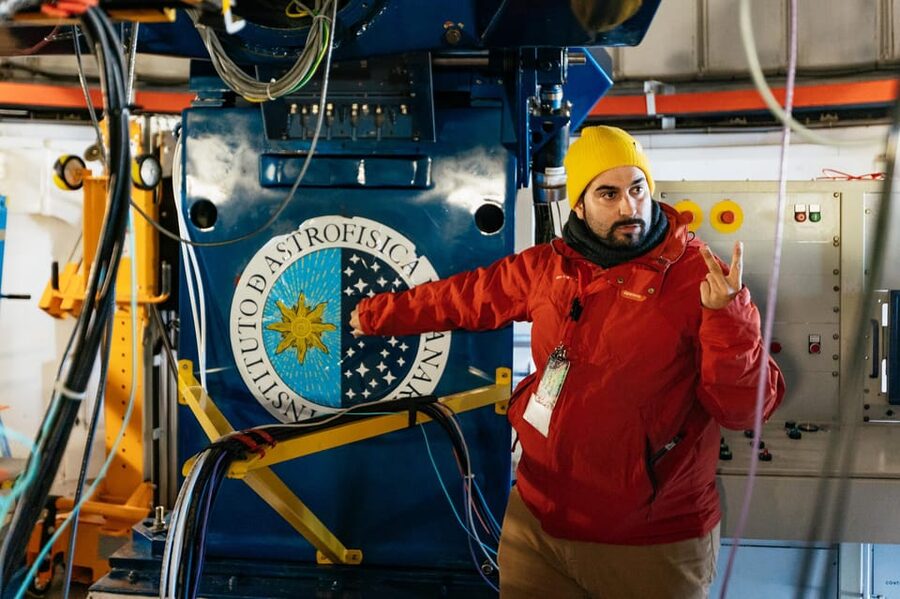
Even if you are doing a daytime visit, you will head to one of the nocturnal telescopes during the tour. That stop gives you a peek into the big, serious hardware designed for night observation.
This part is valuable because telescopes look impressive, but the “why” is what makes you respect them. The short video and earlier intro help you understand what you are looking at when you see the telescope structure. It is not only a tour of equipment, it is a tour of function.
You might notice how massive the installations are and how they are built to handle observing conditions. Dark sky astronomy depends on stability and careful control, and the tour’s explanation gives you a sense of what those constraints mean in practice.
If your main goal is stargazing, this stop will not fully replace an evening or night sky session, but it gives you a strong foundation. You leave knowing what night telescopes are trying to do and why solar observing requires separate setups.
It is also a nice mental shift. You start with the Sun, move into a night-focused explanation, then see an actual nocturnal instrument. That contrast helps the whole experience feel like a guided science education rather than a one-off viewing moment.
Views From Teide: The Sky, the Structures, and the Wait Between Stops
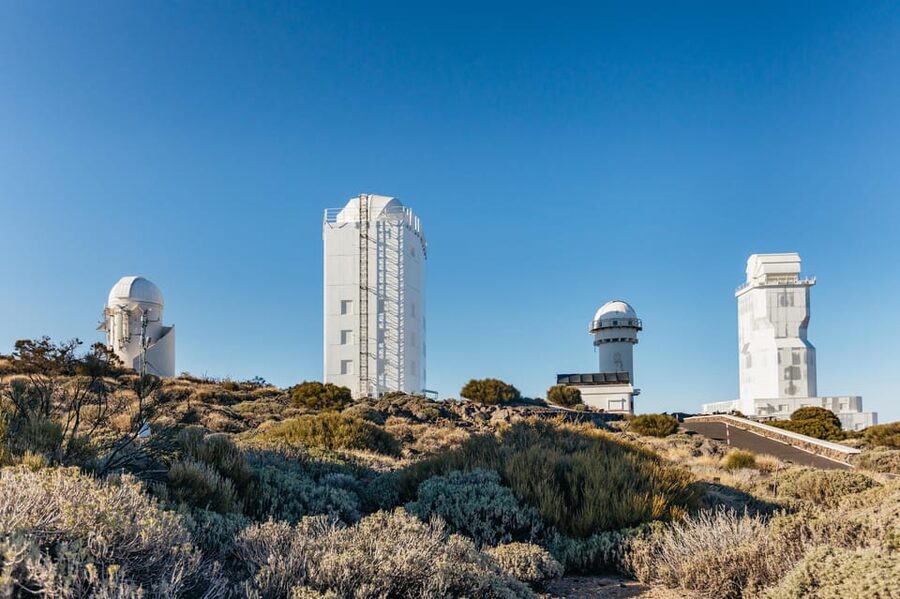
Teide itself adds drama to the experience. The setting feels otherworldly, and you get wide open views that make it clear why this location works for astronomy.
The tour includes time moving around on the property. That outdoor time is part of the charm, but it is also where you should protect yourself. Warm clothing helps because the air can be cold in wind or shade. Sunglasses and sunscreen help because the Sun is strong and the altitude increases exposure.
If you arrive early, there may be a place to sit and potentially buy water, depending on the timing and what is available. I recommend planning your arrival so you can settle before the group starts moving. Waiting in cold or wind is less fun when you are chilled.
Some people also note that sun protection like umbrellas can be part of the experience while waiting outdoors. Even if you bring your own shade solution, it is smart to use whatever the staff provide so you can stay comfortable while you wait.
One minor downside to keep in mind is that not every equipment detail may be shown up close. The tour is structured and time-limited, so if you love walking around and inspecting every component in person, you might feel the flow moves quickly. Still, the main promise is the solar observing plus the guided look at telescope installations, and that core is delivered.
Price and Value: Is $25 for 1.5 Hours a Good Deal?
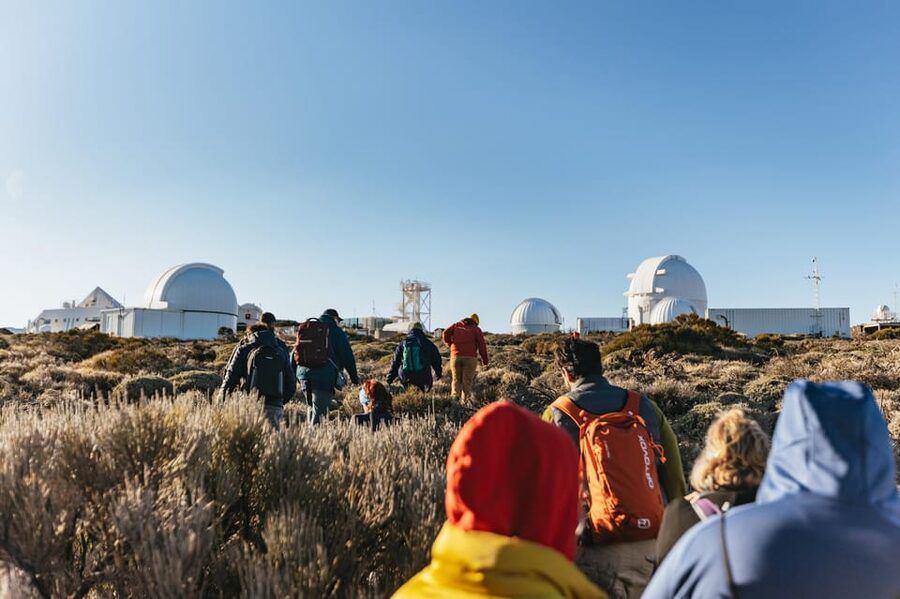
At about $25 per person for a 1.5-hour guided visit, the value depends on what you want out of the experience. If you are expecting a long museum-style outing, the duration might feel short. But if you want professional solar viewing plus a night telescope stop, it is a strong use of time.
Here is what you get for the price: entrance to the observatory, the guided tour, use of two solar telescopes, and access to a professional night telescope. You are also told how observatories work, including a short video about the sky and the nighttime observing process.
For many visitors, the telescope access is the biggest draw. DIY solar viewing is hard, and even if you own the right filters, you do not get guided interpretation of what you see. This tour removes the guesswork and gives context for your observations.
Transportation is not included, and food and drink are not included. So you will likely budget for water on your own. The good news is that the time window is short, so you can plan meals around it.
Net: for $25, you are buying guided access to professional instruments at a world-class site, and that is the kind of value that tends to make sense even if your astronomy interest is casual.
Who Should Book This Teide Solar Observatory Tour?
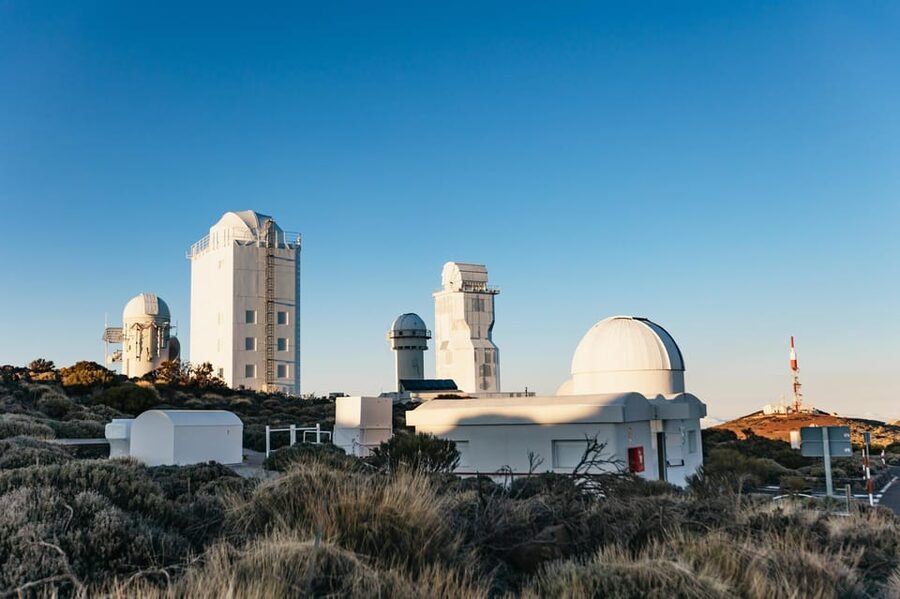
This tour is best for people who like science explanations paired with real viewing. It is ideal if you want a structured introduction to astronomy without needing prior knowledge. Even if you are not an astronomy nerd, the guide-led format helps you make sense of what you see in the telescopes.
You might especially enjoy it if you:
- want to see the Sun through professional solar telescopes
- like guided Q and A with a passionate guide
- are traveling as a mixed group, from curious beginners to experienced sky watchers
It is not a great fit if you:
- have respiratory issues
- have mobility impairments
- are traveling with children under 8
- expect long indoor time in warmth, because altitude comfort and outdoor time matter
Also, oxygen is reduced at altitude, so be honest if you have any condition that makes breathlessness or fatigue likely. This is not the time to push through.
If you are sensitive to cold or wind, bring layers. Reviews also mention warm clothing and gloves as useful. You will likely feel it more than you expect once you are at 2,400 meters.
Finally, if your plan is to do only one Teide-related activity, this is a strong choice for people who want science, safety, and a clear reason to be at the top.
Should You Book This Mount Teide Observatory Guided Tour?
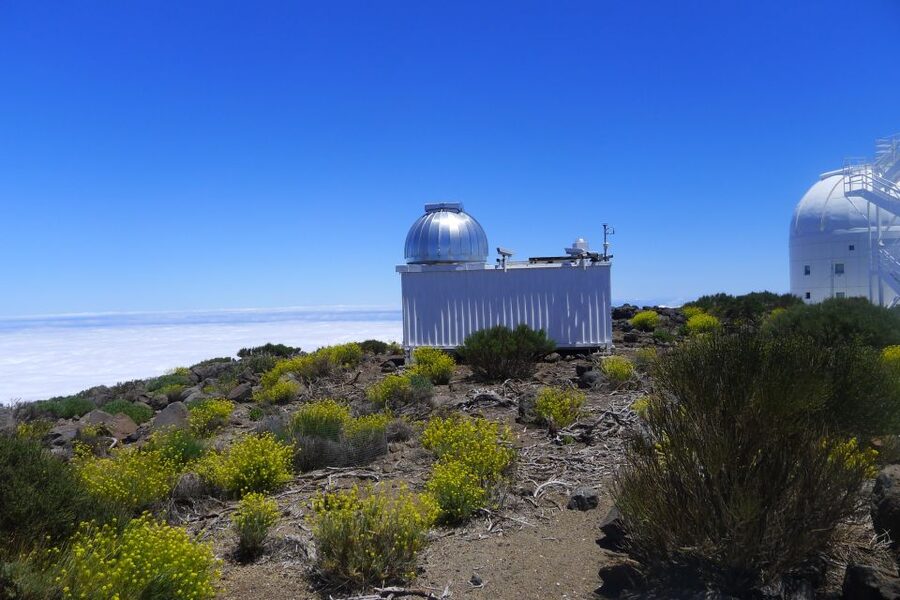
I think this tour is an easy yes if you want a guided, safe way to see solar activity and understand how observatories function. The fact that you get two separate solar telescope views plus a look at a nocturnal telescope makes it more than a quick photo stop.
Skip or reconsider it if altitude or respiratory strain is an issue for you, or if you need fully accessible, low-walking options. Also, if you are expecting cinematic, dramatic solar explosions, set your expectations toward observing features like sunspots and flare-related activity through filters and optics.
If you are the type of person who asks how things work, or you love turning a view into a lesson, book it. It is one of those experiences where the setting does the talking, and the guide helps you hear it.
Just Added to the Tenerife Lineup
Mount Teide Tours, compared.
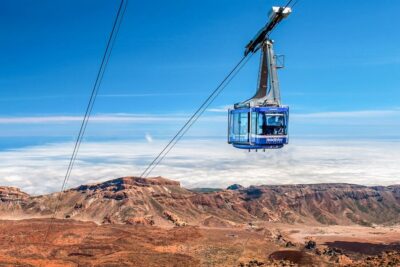
Mount Teide Tour with Cable Car Ticket & Transfer
Read our review →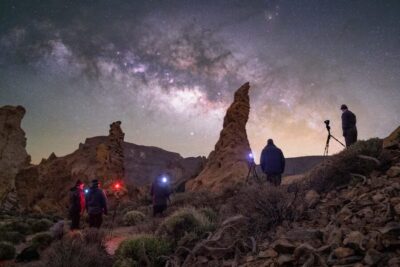
Teide National Park Sunset & Stargazing with Dinner (Star Safari)
Read our review →
Teide National Park: Sunset & Stargazing Safari with Dinner
Read our review →
Mount Teide, Masca, Icod and Garachico Day Trip
Read our review →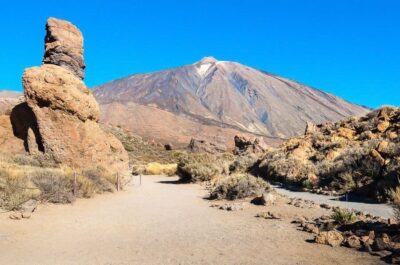
Teide National Park Full-Day Tour with Pickup
Read our review →
Browse the lists this tour appears in