
Reviewed · TEIDE STARGAZING TOURS
Teide National Park: Stargazing Experience
Few places make the sky feel this close.
This stargazing session at Teide National Park turns night-sky astronomy into something you can actually follow, starting with the stars you can see with your own eyes and moving to telescope views. I like that the guide keeps things clear and friendly for all ages and experience levels, and I also love the small-group feel with a cap of 20 people. One drawback to plan for: it gets cold up on the mountain, so bring real warmth, not just a light top.
The experience is built around a simple rhythm, and that’s a win for first-timers. You get an astronomer’s commentary on stars, planets, constellations, and more, then you look at major targets through powerful telescopes. Guides like Miguel, Adri, and Óscar are specifically praised for being upbeat, answering questions, and making the sky feel less mysterious fast.
If you’re expecting guaranteed planet viewing, keep your expectations flexible. Some nights include show-stoppers like Saturn, Jupiter, and the Moon in telescope views, but the exact lineup depends on timing and observing conditions.
In This Review
- Key highlights at Teide after dark
- Teide at 7:30 pm, and why the timing matters
- Where you meet in Santa Cruz de Tenerife (and how to get there)
- Your astronomer guide, and how the explanations actually help
- Nudge your eyes: naked-eye sky, then telescopes
- What you can see from Teide: planets, Moon, Milky Way, and galaxies
- The astrophotography telescope: how the experience becomes images
- Pacing, group size, and why 20 people is a sweet spot
- Dressing for Teide nights: the cold is real
- Price and value: why $42.33 can make sense
- Weather checks and what to do if the sky won’t cooperate
- Who this stargazing tour suits best
- Should you book Teide National Park stargazing?
- FAQ
- Where is the meeting point for the Teide stargazing tour?
- What time does the experience start?
- How long does the stargazing experience last?
- Is transport included in the tour price?
- What languages are offered?
- Is the tour suitable for children?
- Do I need to bring warm clothing?
- What if the weather is bad?
- Is there a refund if I cancel?
Key highlights at Teide after dark
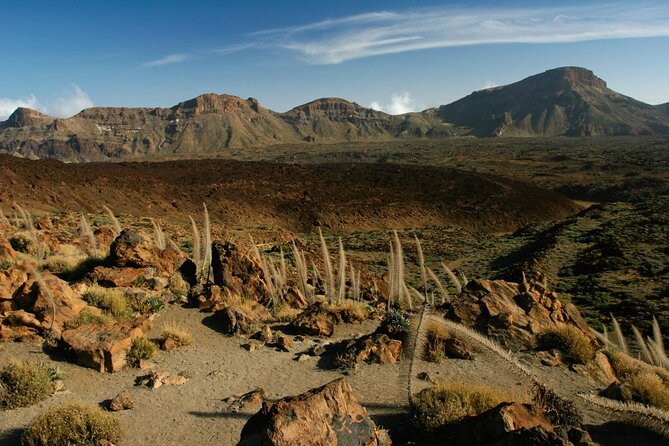
- Teide National Park views with explanations that work for beginners and returning sky nerds
- Naked-eye astronomy first, then telescopes for sharper, more detailed objects
- Professional astronomer guide (Starlight Guides) with lots of Q and A energy
- Astrophotography telescope so what you see has an imaging component
- Small group size (max 20) for a calmer, less rushed experience
- Cold-weather reality check since Teide nights can be chilly even when the day feels mild
Teide at 7:30 pm, and why the timing matters
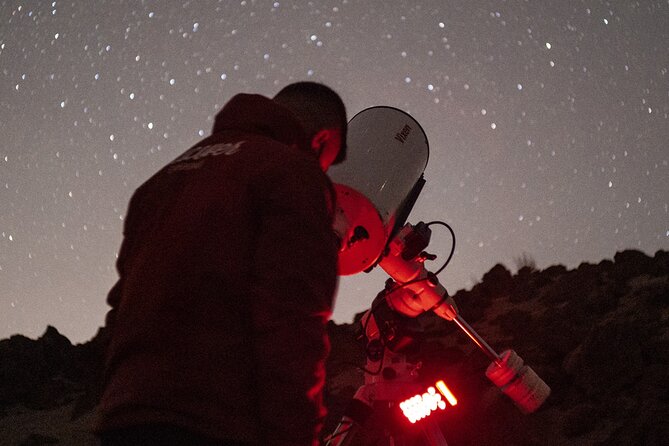
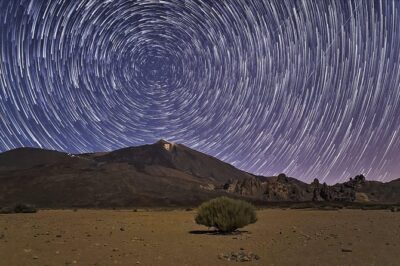
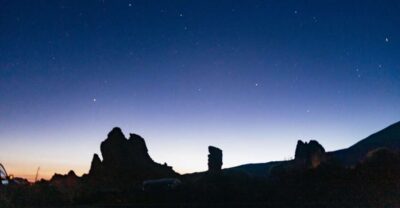
This tour starts at 7:30 pm, and that matters more than you might think. Stargazing is all about dark skies, steady conditions, and giving your eyes time to adjust. Teide’s volcanic setting helps because you’re looking up from a high, open area where the night sky can look dramatically clearer when the weather cooperates.
You’ll spend about 1 hour 20 minutes at the park, and the format is short on purpose. It’s long enough to learn the basics and actually use the telescopes, but not so long that you freeze solid. A lot of people come hoping to spot something specific, then end up loving the whole process of learning to recognize patterns, stars, and the Milky Way.
One of the clearest night skies anywhere
- Tenerife: Teide National Park Sunset & Stargazing Tour
★ 4.2 · 3,812 reviews - Tenerife: Sunset and Stargazing at Teide National Park
★ 4.7 · 2,826 reviews - Teide National Park Sunset & Stargazing with Dinner (Star Safari)
★ 5.0 · 2,601 reviews - Teide National Park: Sunset & Stargazing Safari with Dinner
★ 4.6 · 2,115 reviews - Teide by Night: Sunset & Stargazing with Telescopes Experience
★ 4.5 · 1,492 reviews
Where you meet in Santa Cruz de Tenerife (and how to get there)
The meeting point is Mines of San Jose, 38300, Santa Cruz de Tenerife, and the tour ends back at the same place. Transport is not included, so you should plan your own ride or car. That said, the route and the drive up to the meeting area are part of the appeal. In real-world feedback, people describe the journey as breathtaking, which is nice because it makes the “pre-sky” part feel like part of the day.
Practical tip: arrive early enough to park, get oriented, and use the restroom if needed. Since it’s a night activity, you do not want to waste your first minutes fumbling with gear or phones while everyone else is heading toward the dark-sky area.
If you’re staying in or near Santa Cruz, this is a workable evening option. If you’re far from the city, you’ll want to build extra time for your own transportation so you don’t show up stressed.
Your astronomer guide, and how the explanations actually help
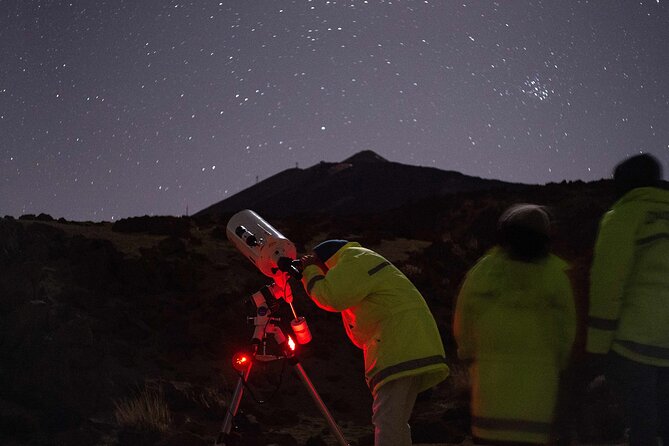
This is led by a professional astronomical guide from Starlight Guides, and the tone matters. The best part of these tours is not just the equipment, it’s how the guide connects what you see to what you’re learning.
In guides’ descriptions and real feedback, you’ll hear commentary on things like:
- stars and constellations
- planets and why you might see certain objects on certain nights
- galaxies, clusters, and nebulae
- how to understand what you’re looking at without needing a science degree
People also highlight that the guides are comfortable answering questions. Names that come up again and again include Miguel, Adri, and Óscar. That’s a good sign. When a guide can field questions, it means you get more than a script. You get the sky explained in a way that sticks.
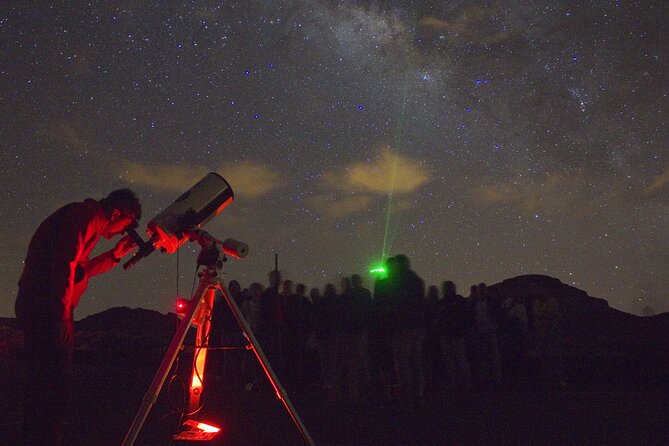
You should also expect some interactive pointing. One review specifically mentions a laser used to point out features like the Milky Way and star positions. Even if the exact technique varies by guide and night, the overall goal is the same: help you find objects, not just look at them.
Nudge your eyes: naked-eye sky, then telescopes
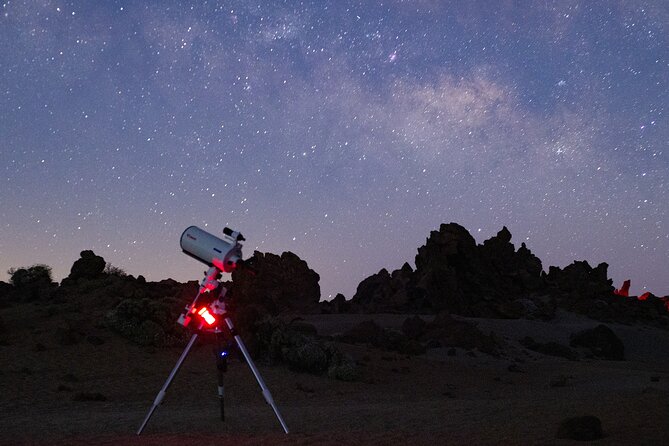
The itinerary is built for two different ways of seeing. First you learn the night sky with the naked eye, then you switch to telescopes for more detail.
Why this sequence is smart:
- When you start with the sky, you understand location and context. You learn what a constellation looks like, what region of the sky the guide is working in, and why the telescope view makes sense.
- When you go to the telescope, it becomes clearer what you’re seeing. Instead of random points of light, you get objects with a name, a type, and a reason they matter.
For your first telescope view, that difference is everything. Even if you’ve never used a telescope before, the guide’s explanations help you connect the dots. You might hear some terms like nebulae or galaxies, and then immediately see how they look through equipment designed for night viewing.
Also, the vibe is practical. This is not a lecture hall. It’s a guided observing session, so you’re actively looking at the sky throughout.
The volcano that gives the island its shape
What you can see from Teide: planets, Moon, Milky Way, and galaxies
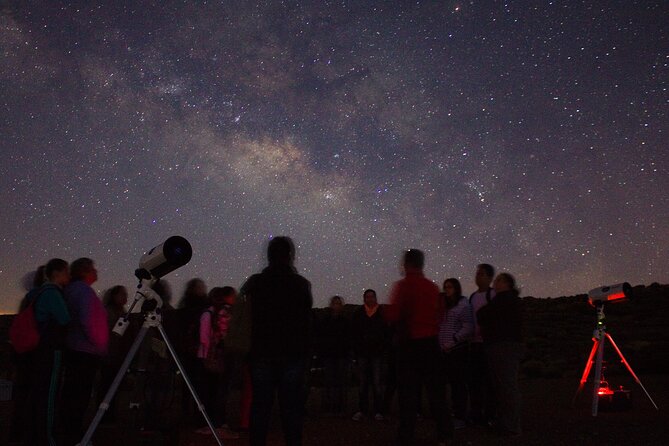
The big draw here is telescope time plus the visibility of Teide’s dark sky. Many participants call out the chance to see famous objects. Based on the descriptions and feedback tied to the experience, common highlights include:
- Saturn (often a standout)
- Jupiter
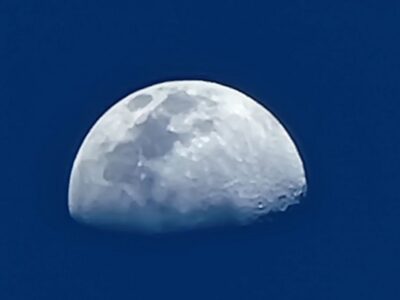
- The Moon
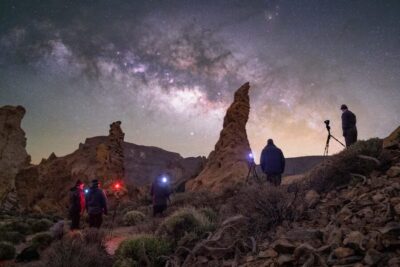
- The Milky Way visible with the naked eye when conditions are good
- the Andromeda Galaxy
- nebulae and star clusters
A key caution: your actual list depends on the night’s sky and your timing. One person notes they hoped for planets but their timing wasn’t right, which is a reminder to not treat this like a guaranteed checklist.
If you’re the type who wants a specific planet, come ready with patience. If you’re more flexible and you enjoy learning to read the sky, you’ll likely feel like you got more than you expected.
One of the best outcomes is when telescope views connect to what you already saw with your eyes. That’s how the sky starts to feel familiar, and it makes future stargazing easier.
The astrophotography telescope: how the experience becomes images
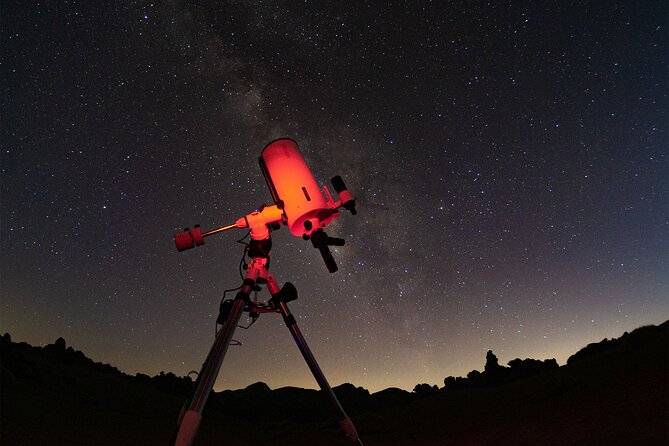
This tour includes an element tied to imaging, described as an astrophotographic telescope that helps turn what you see into stunning images. The practical value for you is that the tour is not only about eyeballing objects. It’s also about capturing the sky in a way your phone can’t easily match.
What you should expect in real terms: the group uses telescope equipment in a way that supports photography or image output. Even if you’re not a photographer yourself, it’s still useful because it adds a visual payoff and gives you a souvenir pathway beyond memories.
If you’re already into astronomy and you want to compare how targets look through different equipment, this is also a nice touch. The emphasis stays on observing, but the imaging component helps make the experience feel modern, not old-school.
Pacing, group size, and why 20 people is a sweet spot
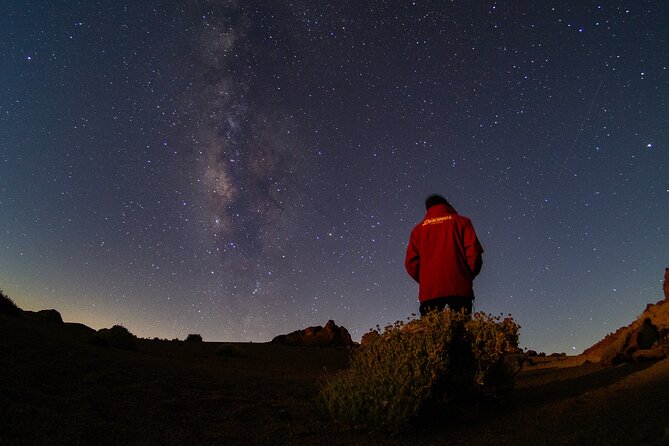
The tour has a maximum of 20 travelers, which helps a lot at night. With smaller groups, you’re less likely to get lost in the back and more likely to ask questions without feeling rushed.
The pace matches the short duration:
- learn what you’re looking at
- point, observe, and listen
- shift to telescope viewing for the most interesting objects
- wrap up and return to the meeting point
For families, this pacing tends to work. Reviews mention that children handled it well, and teenagers also found it inspiring. That doesn’t mean it’s a kids-only show. It means the guide can explain clearly without talking down.
One more comfort detail: dress for cold, and you’ll enjoy the full hour. If you show up in a barely-there layer, you might spend the first portion thinking about warmth instead of stars.
Dressing for Teide nights: the cold is real
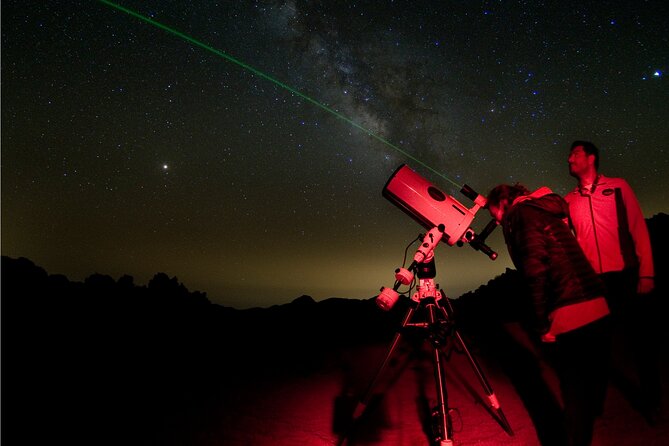
Dress appropriately is the official advice, and real-world feedback makes it practical: it can be cold during the presentation and even colder once you’re settled and observing longer.
What that means for you:
- bring a warm jacket, not just a sweatshirt
- wear layers you can adjust
- consider warmer outer gloves or something similar if you run cold
If you’re worried about overpacking, remember the tour length is about 80 minutes. You just need enough warmth to stay comfortable through the guided observing and telescope time.
This is one of the most consistently praised aspects, because people enjoy the experience more when they can actually relax and look up without their teeth chattering.
Price and value: why $42.33 can make sense
The price is $42.33 per person, and the tour includes several things that make it feel like more than a casual walk-and-look option:
- admission ticket included for the experience time in Teide National Park
- telescope observing and explanation
- a professional astronomical guide
- insurance during the tour
- mobile ticket
Transport is not included, so you do need to factor in how you’ll get to Mines of San Jose. Still, the value is strongest when you compare what you get for the money: guided astronomy plus serious observing time with equipment that you would not typically rent for a quick evening.
Also, the fact that it’s booked about 22 days in advance on average suggests demand. That’s not a reason by itself to buy, but it can be a hint that the scheduling is popular and you should reserve early if you’re traveling at peak times.
If your goal is to turn the night sky into something you can recognize, this price usually feels fair because the guide’s time is the main cost driver, and it’s what makes the telescopes meaningful.
Weather checks and what to do if the sky won’t cooperate
This experience requires good weather. If the tour is canceled due to poor weather, you’ll be offered a different date or a full refund.
That’s important because astronomy is one of those activities where clouds, haze, or wind can ruin the view fast. If the forecast looks shaky, you still can keep a good attitude. The operator plans for the reality of mountain skies.
A smart move for you: wear layers and prepare as if it might be cold, even if the day was pleasant. Mountain conditions often change quickly after sunset.
Who this stargazing tour suits best
This tour is a strong fit if you want:
- a guided night-sky experience that works for all ages and all levels of knowledge
- telescope viewing plus a beginner-friendly explanation of what you’re seeing
- a compact outing that is only about 1 hour 20 minutes
- a small-group setting that keeps questions easy
It also works well if you’re visiting Tenerife and want something different from beaches and viewpoints. Stargazing at Teide feels like a side of the island that you can’t fully replicate elsewhere.
If you’re an experienced amateur astronomer, you might find the early explanations basic. That still doesn’t mean it’s not worth it. The observing spot and telescope targets can still make it a worthwhile evening, especially if you’re just there to enjoy clear skies and the atmosphere.
Should you book Teide National Park stargazing?
Yes, if you want a structured, friendly night-sky experience where the sky is the main event. The combination of naked-eye learning, telescope observing, and a real professional guide from Starlight Guides makes this more rewarding than a casual look-up session.
Book it if:
- you’re traveling with family or mixed skill levels
- you want to see high-profile targets like Saturn and the Moon when conditions allow
- you value clear guidance, including things pointed out with a laser and explained on the spot
Skip it or think twice if:
- you can’t handle cold evenings and don’t want to layer up
- you need a guaranteed planet list every single time
If you come prepared, you’ll likely leave feeling like you understand the sky a little better than you did when you arrived, and that’s the kind of souvenir that keeps paying off.
FAQ
Where is the meeting point for the Teide stargazing tour?
The tour meets at Mines of San Jose, 38300, Santa Cruz de Tenerife, Spain.
What time does the experience start?
The start time is 7:30 pm.
How long does the stargazing experience last?
It lasts about 1 hour 20 minutes.
Is transport included in the tour price?
No. Transport is not included.
What languages are offered?
The tour is offered in English. (The experience information specifically lists English.)
Is the tour suitable for children?
Yes, it is suitable for people of all ages, but children must be accompanied by an adult.
Do I need to bring warm clothing?
Yes. Dress appropriately, and plan for cold night conditions on Teide. Reviews mention it can be chilly during the presentation.
What if the weather is bad?
This experience requires good weather. If it’s canceled due to poor weather, you’ll be offered a different date or a full refund.
Is there a refund if I cancel?
Yes, free cancellation is offered. You can cancel up to 24 hours in advance for a full refund. If you cancel less than 24 hours before the start time, the amount paid is not refunded.
More National Parks in Tenerife
- Tenerife: Snorkeling Tour in a Marine Protected Area★ 4.9 · 636 reviews
- Tenerife: Teide National Park Guided Buggy Tour★ 4.7 · 609 reviews
- Small Group Teide National Park Volcanic and Forest Wonders★ 5.0 · 402 reviews
- Tenerife. Stargazing in Teide National Park★ 4.9 · 319 reviews
- Teide National Park: Guided Large Telescope Stargazing Tour★ 4.9 · 319 reviews
Just Added to the Tenerife Lineup
Teide Stargazing Tours, compared.
Teide National Park Sunset & Stargazing with Dinner (Star Safari)
Read our review →
Teide National Park: Sunset & Stargazing Safari with Dinner
Read our review →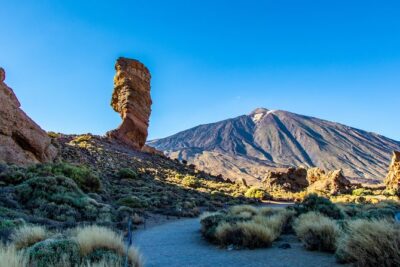
Teide by Night: Sunset & Stargazing with Telescopes Experience
Read our review →
Teide: Guided Sunset & Stargazing Tour by Night with Dinner
Read our review →
Teide Night Experience with Dinner and Stargazing
Read our review →Browse the lists this tour appears in