
Reviewed · SCUBA DIVING
PADI Advanced Open Water Diver Course (AOWD) – 2 days
If you want your next scuba step to feel practical, this is it. In Tenerife, the PADI Advanced Open Water Diver course at Scubanana is built for real skill gains, not just check-the-box training. You get a small group, focused coaching, and hands-on work across different underwater adventure activities.
I love how gear rental and course materials are handled for you, so you can focus on learning. I also like the way the staff names show up in people’s stories, with instructors such as Giulia, Pauline, Fran, Denis, Isaac, Benny, Izaac, and Kathi leading key parts of the training and keeping things calm.
One thing to consider: photos are not included, and you’ll still need a fit-focused personal setup. If you can, bring your own mask, since borrowed gear fit can be a little hit-or-miss.
In This Review
- Key highlights I’d plan around
- Tenerife AOWD: why this upgrade feels worth it
- The Scubanana setup in Radazul (and why location matters)
- What you actually do during a two-day AOWD
- The skills people remember most
- Stop 1 at Scubanana: what your first hours feel like
- How gear rental and learning materials affect your experience
- Instructors you might meet, and why that’s a real detail
- Course credit: how AOWD can feed future specialties
- What the itinerary feels like across two days
- Price and value: what $539.48 buys you
- Who this course is best for (and who might rethink it)
- Practical tips I’d use before you go
- Should you book PADI AOWD in Tenerife with Scubanana?
- FAQ
- Where is the course meeting point?
- What time does the activity start?
- How long is the PADI Advanced Open Water Diver course?
- What language is the course offered in?
- Do I need to already be certified before I can join?
- Is gear rental included?
- What’s included in the price?
- What is not included?
- Is the group large?
- Can I fly right after the course?
- What is the cancellation policy?
Key highlights I’d plan around
- Small groups (max 8), which makes instructor attention easier to get
- Buoyancy and navigation practice, taught by instructors including Giulia, Pauline, and Isaac
- Five Adventure activities, with classic options like wreck and night underwater sessions
- East-coast underwater locations, reachable from Radazul without needing you to drive
- Full course package value, with gear, learning material, and PADI fees included
Tenerife AOWD: why this upgrade feels worth it
The PADI Advanced Open Water Diver course is often misunderstood. You do not need to arrive feeling “advanced.” The whole point is to advance your skills through supervised training and repeatable techniques, starting right after you’ve completed your PADI Open Water certification.
Tenerife is a good place for this type of step-up because you can mix different underwater experiences across a couple of days. People also talk about how the training locations are chosen well, with sessions happening from Radazul and along the east coast of the island. That variety matters, because you learn how skills translate to different conditions and tasks, not just one type of swim.
Other things to do around Tenerife
- Southern Tenerife: 50-Minute Submarine Dive
★ 4.8 · 2,216 reviews - Tenerife: Your First Scuba Diving Experience in Turtle Area
★ 4.7 · 1,679 reviews - Tenerife: Beginner’s Dive at a Spot with Turtle Sightings
★ 4.7 · 627 reviews - Tenerife First Time Scuba Dive – Turtle Habitat, Small Groups
★ 4.5 · 456 reviews - Tenerife: Beginner Scuba Dive Experience
★ 4.8 · 238 reviews
The Scubanana setup in Radazul (and why location matters)
Your day starts at Scubanana in Puerto Deportivo, Av. Colón, nº1, 38109 Radazul, Santa Cruz de Tenerife. The meeting point is near public transportation, which is handy if you’re traveling without a car. Also, the dive center setup is described as clean and well organized, and people consistently highlight the relaxed vibe.
That location detail sounds small, but it affects your stress level. When you can roll from your hotel to the start point with less hassle, you arrive fresher and ready to learn. And in a skills course, “ready to learn” beats “running on jet lag and snacks.”
The group size cap of 8 is another big deal. In practice, it usually means you spend more time getting feedback and less time waiting. When your instructor can see what you’re doing without guessing, technique improves faster.
What you actually do during a two-day AOWD
The course runs for 2 days (approx.) and is delivered in English. You’ll complete a set of underwater adventure activities that build confidence and expand core scuba abilities. The AOWD structure includes five Adventure activities, and multiple people note the mix includes more challenging modules like navigation and buoyancy control.
You’ll also keep an official log of what you do, since AOWD requires dive records as part of the training pathway. That documentation is useful if you’re continuing on to specialties later, because each Adventure activity can potentially credit toward the first part of the matching PADI Specialty course.
The skills people remember most
From the instructor stories, a few themes show up again and again:
Buoyancy control is treated as more than floating. Instructors like Giulia and Pauline are specifically credited with helping students master buoyancy, which is the foundation for everything else. Better buoyancy means less stress, better body position, and smoother movements.
Navigation gets real attention. Training guided by people such as Pauline and Isaac is repeatedly described as clear and confidence-building. If you’ve ever felt a little lost underwater, navigation practice is the skill that makes future dives feel easier.
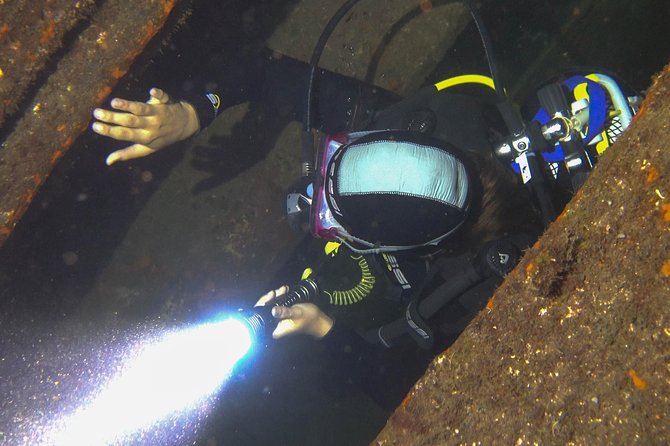
Deep and wreck training shows up in multiple accounts as a distinct highlight. Instructor Fran is mentioned for introducing deep and shipwreck underwater sessions, with structured guidance for what to do and how to stay calm.
Night underwater sessions are also part of the classic mix, and one person described it as their first ever. Night training is usually where confidence is tested, so having an experienced guide matters.
Heading further into Tenerife? Here's what else is nearby.
Stop 1 at Scubanana: what your first hours feel like
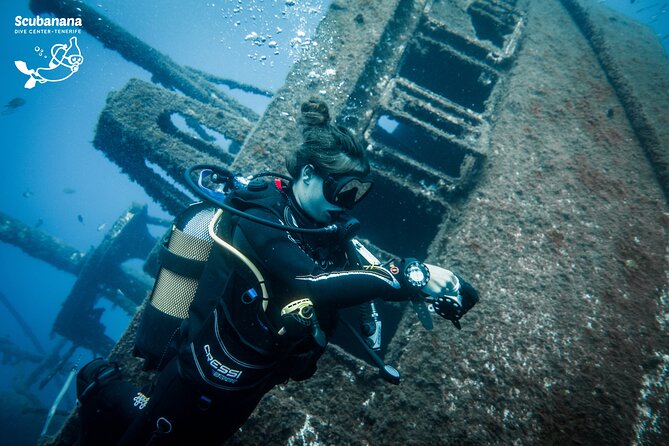
At the start of the course, you’re anchored at the Scubanana facility. Even though you’ll do most of the learning underwater, the pre-water setup is where good courses separate from mediocre ones.
In the feedback, people stress two things: the professional safety focus and the staff’s ability to keep the mood fun. That combination matters because you’re about to do new tasks. If your instructor is strict only for strict’s sake, you’ll be tense. If they’re laid-back only for comfort, you’ll feel unprepared. The best version is firm, friendly, and very specific about what you should do next.
You’ll also receive the learning materials as part of the package, plus PADI fees. That reduces the common “admin headache” factor, where you spend time later figuring out what you owe. Here, you can focus on the training day.
How gear rental and learning materials affect your experience
A major value point: no need to organize gear rental, since diving equipment is included. This matters if you’re arriving from a hotel and want to keep your travel light. It also matters if you’re not sure which gear is the simplest to adapt to quickly.
At the same time, don’t ignore the one practical warning from feedback. Someone recommended bringing your own mask because fit was not perfect with borrowed gear once. So, if you’re a mask-sensitive person, pack yours. If you’re not, you can still rely on the center’s kit, which people describe as in excellent condition.
Learning materials and instructor coaching also mean you’re not just doing tasks. You should understand what you’re practicing and why it matters. That is what turns the course from a checklist into actual confidence you can use later.
Instructors you might meet, and why that’s a real detail
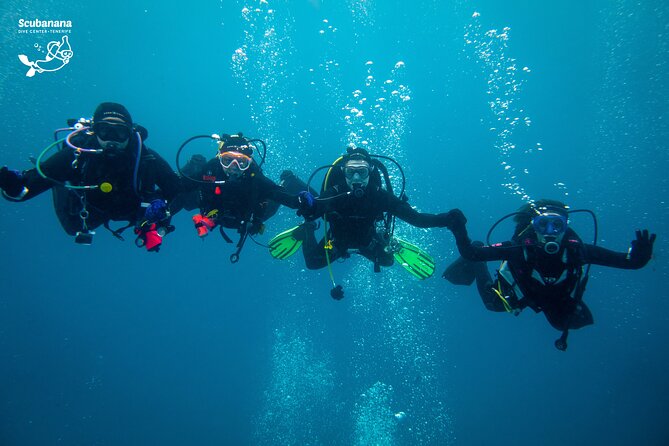
One of the most convincing parts of this course is the staff quality people attach to it. Multiple accounts praise instructors by name, and that helps you imagine the training style.
- Giulia and Pauline: repeatedly mentioned for supporting buoyancy and navigation skills.
- Fran: described as introducing deep and shipwreck underwater sessions and guiding a first-time night session.
- Denis: credited as a great instructor in the course mix, including challenging modules.
- Isaac, Benny, Izaac, and Kathi: mentioned across courses as supportive, competent, and able to work with different levels.
There’s also a consistent theme that instructor attention feels responsive to individual needs. In a small group, that matters even more. If you struggle with buoyancy one day and do fine another day, a good instructor adjusts the coaching in real time.
Course credit: how AOWD can feed future specialties
A big practical reason to do AOWD is what it can unlock later. The course info states that each Adventure activity may credit toward the first activity of the corresponding PADI Specialty course.
So if you’re thinking ahead, do the AOWD with an eye on your next step. For example, if you know you want a specialty that starts with deep, navigation, wreck, or night-type skills, AOWD can reduce repetition later. If you already completed a specialty, ask whether you can earn credit for an Adventure activity.
What the itinerary feels like across two days
While the exact schedule can vary with conditions, the pattern is usually:
Day 1: more foundational skills and one of the course adventure modules, with time to build comfort and technique. People highlight buoyancy and navigation support early, which makes sense because those skills reduce stress for the rest of the course.
Day 2: additional modules, often including the more memorable experiences like wreck training and night underwater sessions. Multiple accounts describe these as fun and also more challenging, but still instructive and manageable with the right coaching.
Across both days, the small-group format keeps the pace from feeling chaotic. You’re not doing a solo project. You’re learning as a team of a few, which can be easier for beginners who want structure.
Price and value: what $539.48 buys you
At $539.48 per person for two days, the key value is not just the instruction time. It’s what’s included:
- Local taxes
- Instructor coaching
- Diving gear
- Learning materials
- PADI fees
Photos and diving insurance are not included. That’s normal for many training packages, but it’s worth planning for. If you want photos, budget separately. If you don’t already have appropriate coverage, sort it out before you arrive.
If you compare this to the true cost of renting gear, buying materials, and paying PADI-related fees separately, the package feels more balanced. The “value” here is time and hassle saved, plus consistent supervision across multiple underwater adventure modules.
Who this course is best for (and who might rethink it)
This AOWD format is designed for people who already finished PADI Open Water Diver certification. The course also works as a step-up for PADI (Junior) Open Water Divers who are at least 12 years old.
You’ll likely enjoy it most if you want:
- A structured upgrade, not random extra excursions
- Small-group coaching for skills like buoyancy and navigation
- A course that includes both challenging modules and memorable sessions like night and wreck
You might rethink it if you’re not physically able to dive or if you’re trying to do this right before travel. The info explicitly says you should not do underwater activity 12 hours before a flight, so plan your itinerary around that.
Practical tips I’d use before you go
Here are the things that make a measurable difference, based on the realities of this kind of training:
Bring your own mask if you can. At least in one case, fit was the weak link with borrowed gear.
Bring your logbook. One person specifically reminded others to not forget it.
Plan for an active day. The course expects you to be in physical condition to dive and notes moderate physical fitness is needed.
Give yourself easy transport. The meeting point is near public transportation, so you can plan around that and reduce stress.
Finally, read your own comfort cues. A good instructor will teach you, but you still need to speak up if something feels off.
Should you book PADI AOWD in Tenerife with Scubanana?
I think it’s a strong booking if you’re ready to upgrade from Open Water and you want real technique work in a small group. The standout strengths are small-group attention, coaching quality backed by multiple instructor names, and a curriculum that includes both navigation and buoyancy control plus memorable modules like wreck and night underwater sessions.
I’d only hesitate if you strongly care about having photos included in the package, since they’re listed as not included. And if you’re mask-sensitive or particular about fit, plan to bring your own.
If your goal is confident, practical scuba progression in Tenerife, this course is built for that. It’s not about being “advanced” on day one. It’s about leaving day two feeling like you can handle more underwater tasks with calm control.
FAQ
Where is the course meeting point?
The course meets at Scubanana in Puerto Deportivo, Av. Colón, nº1, 38109 Radazul, Santa Cruz de Tenerife, Spain.
What time does the activity start?
The start time is 9:00 am.
How long is the PADI Advanced Open Water Diver course?
It runs for 2 days (approx.).
What language is the course offered in?
The course is offered in English.
Do I need to already be certified before I can join?
Yes. You have to be a certified Open Water Diver to take part.
Is gear rental included?
Yes. Diving gear is included, so you don’t need to organize rental separately.
What’s included in the price?
The price includes local taxes, the diving instructor, diving gear, learning material, and PADI fees.
What is not included?
Diving insurance and photos are not included.
Is the group large?
No. The experience has a maximum of 8 travelers, which keeps it small-group.
Can I fly right after the course?
You should not dive 12 hours before a flight.
What is the cancellation policy?
You can cancel up to 24 hours in advance for a full refund. If you cancel less than 24 hours before the start time, the amount paid will not be refunded.
Just Added to the Tenerife Lineup

Scuba Diving, compared.
Your First Scuba Diving Experience in Turtle Area
Read our review →
Beginner’s Dive at a Spot with Turtle Sightings
Read our review →
Tenerife First Time Scuba Dive – Turtle Habitat, Small Groups
Read our review →
Try Dive – PADI Discover Scuba Diving in Tenerife
Read our review →
RECREATIONAL DIVE (certified divers only) : Explore Canarian Sealife
Read our review →
Browse the lists this tour appears in